
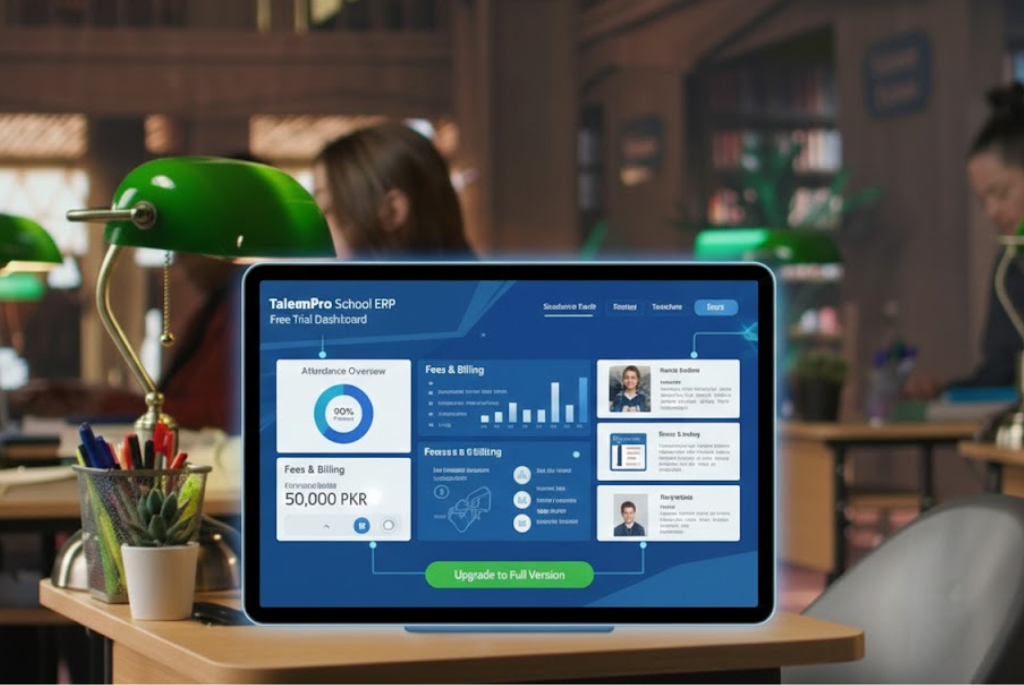
Are you finding it difficult to manage administrative challenges while maintaining high educational standards across multiple school branches? Running a school in Pakistan’s major cities comes with unique pressures — from handling large student populations in Karachi to meeting growing technology expectations in Islamabad. Studies reveal that schools using integrated digital management systems experience up to a 40% reduction in administrative workload within the first year. This guide will help you understand how to choose the best school ERP system designed specifically for the needs of Karachi, Lahore, and Islamabad. You’ll discover localized features, budget-friendly solutions, and practical strategies to successfully digitize your institution in 2026.
Why is finding the best school ERP crucial for Pakistan’s urban schools?
Pakistan’s education sector is rapidly transforming with a strong shift toward smart, data-driven administration. Whether you manage a single campus or a multi-branch school network, the right school ERP system has become the foundation of efficient operations. In high-population cities like Karachi, managing student records manually is no longer practical. Modern digital systems provide the accuracy and transparency schools need to handle admissions, fee management, attendance, staff performance, and academic records without the risks of manual errors.
For example, a leading private school network in Karachi recently upgraded to a centralized digital management platform after facing ongoing challenges with fee tracking across multiple branches. Late payments were difficult to monitor, and manual reconciliation consumed valuable administrative time. After implementing a powerful school ERP solution, administrators were able to monitor financial activity, pending dues, and branch performance through a single real-time dashboard. The result was impressive — automated fee reminders replaced repetitive phone calls, operational efficiency improved significantly, and overall cash flow increased by nearly 25%.
Many school owners initially worry that switching to digital systems may be complicated or expensive. However, the reality in 2026 is clear: continuing with outdated manual processes often creates bigger financial losses, communication gaps, and management challenges than investing in reliable local school management software.
What specific features should you look for in a school ERP Karachi?
Karachi’s educational sector is defined by its scale and diversity. The best school ERP for this region must be robust enough to handle high-traffic data during peak admission seasons. One of the most critical features for the Karachi market is a seamless fee management system integrated with local banking channels. Since many parents prefer digital wallets or direct bank transfers, your software must reconcile these payments automatically to avoid administrative bottlenecks.
Furthermore, security remains a top priority. By 2026, data privacy regulations in Pakistan are becoming increasingly strict. A dependable school ERP must provide end-to-end encryption for student information along with secure cloud-based hosting. A brief case study from a secondary school in Gulshan-e-Iqbal demonstrated that switching to a cloud ERP safeguarded records during a local server hardware crash that could have erased years of academic data. When choosing a system, always prefer solutions with local support teams able to reach onsite quickly during technical issues, ensuring uninterrupted school operations across all branches and campuses smoothly.
How does ERP Lahore Islamabad integration differ from other regions?
In Lahore and Islamabad, the focus is usually on strong parental engagement and advanced academic reporting. These cities have some of the most tech-savvy parent populations in the country. Therefore, a successful ERP Lahore Islamabad implementation focuses heavily on the mobile experience. Parents expect real-time notifications about their child’s attendance, quiz marks, and school announcements directly on smartphones.
A prestigious O-level school in Islamabad recently reported that parental satisfaction scores jumped by 50% after launching a dedicated parent portal via their ERP. This portal allowed parents to view “Teacher Comments” daily, creating a more collaborative educational environment. In Lahore, schools often use ERPs to manage complex logistical tasks, such as transport tracking and library automation. The best school ERP for these regions isn’t just a database; it’s a communication hub. From my professional perspective, the biggest mistake schools in these cities make is buying a global software that doesn’t understand the local curriculum or the specific grading nuances of the Punjab or Federal boards.
Localized compliance and board requirements
Local school software should generate reports that comply with Board of Intermediate and Secondary Education (BISE) formatting requirements standards efficiently automatically.
Whether it involves producing automated character certificates or internal assessment marks for the board, the system must handle everything efficiently smoothly.
This saves staff hundreds of hours of manual data entry in exam seasons period.
What are the common pitfalls when choosing local school software?
Many school administrators are attracted by low-cost off-the-shelf solutions that appear great in demos but fail live environments settings performance.
The most common mistake is selecting software that lacks scalability.
Your school might have 300 students today but if it grows to 1000 will the system crash under heavy load. Another common error is ignoring user experience (UX) for teachers roles.
If the interface is too clunky your staff will find workarounds or simply stop using it making your investment useless. I’ve learned that hidden costs are silent killers of EdTech budgets sector.
Some vendors offer low initial pricing but charge very high fees for data migration training and annual updates.
To avoid this always ask for total cost of ownership (TCO) breakdown for three years plan.
A school in Lahore’s Johar Town once purchased a cheap system only to discover that every minor update cost them an extra 50,000 PKR amount.
Don’t let that be your story. Instead look for transparent pricing models that include support and training as part of package system.
How can you implement the best school ERP without disrupting your classes?
Implementation is where most projects fail, but it doesn’t have to be this way. The key is a phased rollout. Don’t attempt to digitize every department on day one. Start with pain points usually fee collection and attendance areas. Once these run smoothly, move on to gradebooks and finally the parent portal system. This approach helps your staff acclimate to change without feeling overwhelmed process smoothly.
Actionable takeaways for a smooth transition:
-
Appoint a “Digital Champion”: Select one tech-savvy teacher or admin from each department to lead the training.
-
Clean your data: Before migrating to the new system, delete duplicate records and update parent contact information.
-
Run a parallel system: For the first month, keep your manual records alongside the ERP to ensure data accuracy until you are 100% confident in the software.
Talk to Our Experts Today
Instant support or book a free demo
Conclusion
Choosing the best school ERP is one of the most significant decisions a modern school administrator will make. In Karachi, Lahore, and Islamabad, the competition for student enrollment is fierce, and efficiency is the ultimate differentiator. By investing in local school software that understands the nuances of the Pakistan market, you aren’t just buying a tool—you are building a future-proof foundation for your institution. Remember to prioritize scalability, localized support, and a user-friendly mobile experience. If you take the steps to audit your current needs and vet your vendors properly, you can reclaim your time and focus on what truly matters: providing world-class education to the next generation.
FAQ Section
1. What is the typical cost of the best school ERP in Pakistan?
Pricing varies based on student strength and features. Most local providers offer a “per student, per month” model ranging from 50 PKR to 200 PKR, while others charge a one-time license fee with an annual maintenance cost. It is best to request a customized quote based on your specific branch count.
2. Can a school ERP Karachi handle offline data if the internet is unstable?
Yes, many top-tier ERPs offer offline sync capabilities. This allows staff to record attendance or marks without an internet connection, and the data automatically syncs to the cloud once the connection is restored, which is essential for regions with frequent outages.
3. Is training provided for teachers and staff?
Reputable vendors of local school software include comprehensive training sessions as part of their onboarding. This usually involves on-site workshops and recorded video tutorials to help new staff members get up to speed quickly.
4. Does the ERP Lahore Islamabad support multiple campuses?
Absolutely. One of the primary benefits of the best school ERP is the ability to manage multiple campuses from a single “Super-Admin” account. This allows centralized control over finances, staff transfers, and academic standards across different cities.
5. How long does it take to fully implement the system?
A basic setup can be completed in 7-10 days. However, a full-scale implementation including data migration and staff training usually takes 4 to 6 weeks. A phased approach is always recommended to ensure minimal disruption to the academic calendar.
6. Can I integrate the ERP with my school’s existing website?
Most modern ERPs provide a web-portal integration or an API that allows your school website to host the login page. This provides a professional and seamless experience for parents and students visiting your online domain.