
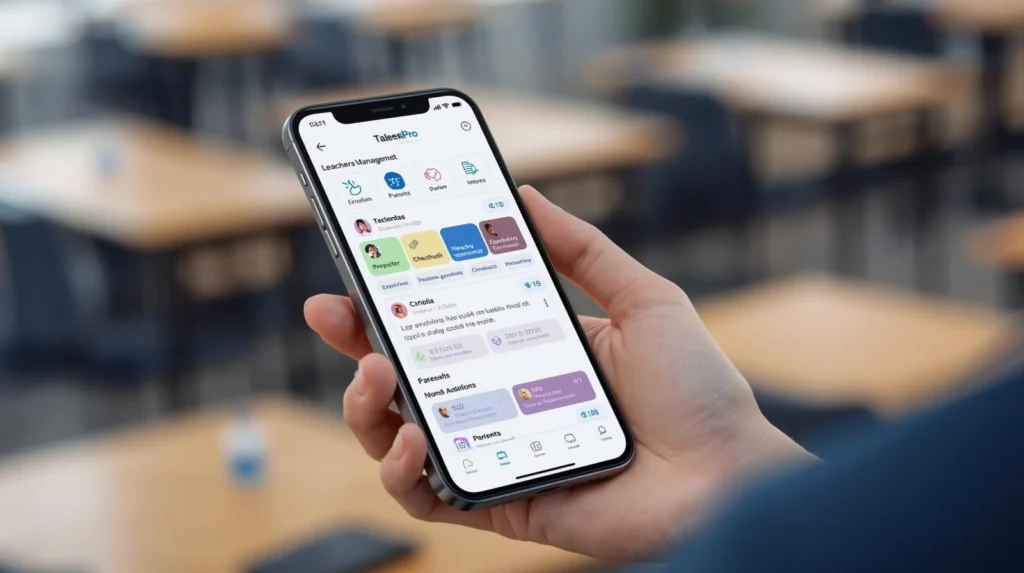
Still discovering crumpled school notices buried deep inside your child’s backpack—days after the event is over? In today’s fast-moving digital world of 2026, depending on paper diaries and scattered WhatsApp groups is no longer enough for modern Pakistani families. Studies show that schools using a dedicated parent-school app experience up to a 45% increase in parent engagement and participation in school activities compared to traditional communication methods. In this article, you’ll explore the latest education technology trends, inspiring success stories from local schools, and practical strategies to help you make the most of digital tools for supporting your child’s academic success.
Why is a parent school app essential for Pakistani families in 2026?
Pakistan’s education system has rapidly embraced digital transformation over the past few years. In 2026, a parent-school app is no longer considered an extra feature — it has become an essential tool for ensuring smooth communication and complete academic transparency. Today’s parents are managing busy professional lives while still wanting to stay actively connected to their children’s education and personal growth. Traditional communication methods often fail because notices get delayed, misplaced, or ignored. A centralized school app eliminates these challenges by providing one reliable platform for everything — from attendance updates and homework alerts to exam schedules and important school announcements.
For instance, a leading private school system in Islamabad recently replaced their manual diary system with a comprehensive school communication app. Within one term, they reported that parent-teacher meeting attendance rose by 60% because parents received automated reminders and could book time slots directly through their phones. This transition eliminates the “information gap” that often leads to friction between the home and the classroom. From my experience consulting with EdTech startups, the most successful schools are those that treat the app as a bridge, not just a notice board. It provides a window into the classroom that was previously inaccessible to working parents.
How does real-time tracking improve student accountability?
One of the most significant trends in 2026 is the use of live data to monitor student behavior and academic standing. Gone are the days of waiting for a quarterly report card to realize your child has been struggling with mathematics or missing first-period classes.
A modern parent school app provides instant push notifications for attendance and daily grades. This immediate feedback loop allows for “micro-interventions”—small corrections made early on that prevent larger academic failures later.
Consider the case of a mid-tier school in Faisalabad that implemented real-time attendance alerts. They found that unauthorized absences dropped by 22% in the first semester. Why? Because students knew their parents would receive a notification within five minutes of the morning bell.
Furthermore, digital gradebooks allow you to see weighted averages in real-time. If a quiz grade is low, you can address the specific topic with your child that evening, rather than three months later when the concept has already moved on. This level of parent engagement transforms the educational process into a collaborative effort between the teacher, the student, and the parent.
The rise of integrated fee management
In 2026, convenience has become a top priority for modern families. One of the most in-demand features among parents in cities like Lahore and Karachi is integrated online fee payment. Advanced parent-school apps now connect directly with local banking systems and popular digital wallets such as Easypaisa and JazzCash. This allows parents to pay school fees instantly without visiting banks or carrying cash, while also ensuring a secure digital record for every transaction.
Schools offering this smart feature have reported up to a 35% faster fee collection rate, helping institutions improve operations and invest more effectively in better learning facilities and opportunities for students.
What are the top 2026 trends in school communication app technology?
As we move deeper into 2026, artificial intelligence and hyper-personalization are redefining how a school communication app functions. We are seeing a move away from “blast” notifications—where every parent receives every message—toward targeted feeds.
If your child is in the debate club, you only receive updates relevant to that activity, reducing “notification fatigue.” This ensures that when your phone pings, the information is actually important to your specific family.
Another burgeoning trend is the integration of AI-driven sentiment analysis within these apps. Some advanced platforms can now flag if a student’s performance patterns suggest burnout or bullying, prompting a proactive check-in from the school counselor.
I have observed that schools in Pakistan are increasingly adopting these features to differentiate themselves in a competitive market. Furthermore, multi-language support (Urdu and English) has become standard, ensuring that all family members, including grandparents who may be primary caregivers, can stay informed regardless of their primary language.
Actionable tips for maximizing app utility:
-
Customize your notification settings: Don’t mute the app; instead, filter it to ensure you only get “High Priority” alerts for attendance and exams.
-
Use the two-way messaging: If the app allows it, send brief, encouraging notes to teachers when your child enjoys a specific lesson. It builds rapport.
-
Sync the school calendar: Most apps allow you to export the school schedule to your personal Google or Outlook calendar to avoid scheduling conflicts.
Can a parent school app really bridge the gap for low-tech households?
One of the biggest concerns for school administrators in Pakistan is whether a digital-first system might leave behind parents who are not comfortable with technology. But in 2026, the reality is very different. With mobile phone usage reaching record levels across Pakistan, a well-designed parent-school app is often far more accessible than traditional computer portals because it uses simple and familiar mobile interactions.
Many schools have discovered that even parents with limited technical knowledge or formal education can easily use an icon-based app to check attendance through simple “Green” (Present) and “Red” (Absent) indicators. In a rural area near Multan, a network of schools introduced a simplified school app featuring voice notes, visual updates, and image-based communication for parents who found long English circulars difficult to understand.
The results were remarkable. Parent participation increased dramatically among families who had previously felt disconnected from the school system. Educators realized an important lesson: simplicity always creates stronger engagement than complexity. By making school apps easy, clear, and user-friendly, schools can make information accessible to every parent and help create a more supportive, informed, and connected learning environment for every child — regardless of background.
What should you look for when choosing the right school app for your institution?
If you are a school owner or a parent on a board of directors, you might feel overwhelmed by the sheer number of options. However, the most successful implementations focus on three pillars: security, speed, and support. In 2026, data privacy is a major concern.
You must ensure the app uses end-to-end encryption for student records and complies with local data protection regulations. A “cheap” app often comes with the hidden cost of poor data security. Secondly, look for local support. Using an international app might seem prestigious, but if it doesn’t understand the Pakistani grading system or local payment methods, it will become a headache.
Seek out a parent school app that has a local presence in Pakistan to ensure they can provide on-ground training for your staff. Finally, the app must be lightweight. It should work efficiently on older smartphones and slower 3G/4G connections, which are still common in many parts of the country. When the technology works seamlessly, it disappears into the background, leaving only the benefits of a more connected community.
Talk to Our Experts Today
Instant support or book a free demo
Conclusion
The rapid evolution of parent-school apps in 2026 has become a major milestone for the future of education in Pakistan. Modern schools are now moving far beyond basic notifications by introducing smart features such as online fee payments, real-time academic monitoring, instant attendance updates, and AI-powered insights that strengthen parent involvement like never before. This digital transformation is not only reducing paperwork — it is creating a stronger, more transparent connection between schools and families.
Whether you are a parent who wants to stay actively involved in your child’s academic progress or a school administrator striving for better efficiency and communication, one thing is clear: digital integration is shaping the future of successful education. Explore your school’s app features today or encourage your institution to adopt a modern solution that meets the growing needs of today’s digital generation.
Frequently Asked Questions
1. Is my child’s data safe on a parent school app?
Reputable apps in 2026 use advanced encryption and secure servers to protect student information. Always check if the app provider complies with Pakistan’s latest data privacy guidelines and ask your school about their specific data-sharing policies to ensure total peace of mind.
2. What if I have multiple children in the same school?
Most modern school communication apps allow for a “Multi-Child” view. This means you can switch between your children’s profiles within a single login, making it easy to manage different schedules, grades, and fee payments without logging in and out.
3. Does the app replace the need for Parent-Teacher Meetings (PTMs)?
No, the app is designed to enhance PTMs, not replace them. By providing data throughout the term, the app ensures that when you do meet a teacher, you can spend time discussing growth strategies and character development rather than just reviewing grades.
4. Will the app work if I don’t have a high-end smartphone?
Yes, most developers now optimize apps for “Android Go” or older versions of iOS to ensure they are accessible to the majority of the Pakistani population. These apps are designed to be low on storage and data usage.
5. How do I get my login credentials for the school app?
Typically, the school administration generates your account once your child is enrolled. You should receive an SMS or email with a download link and a unique activation code. If you haven’t received this, contact the school’s IT department.
6. Can I pay school fees through the app using my local bank?
In 2026, most top-tier apps are integrated with 1Link, EasyPaisa, and JazzCash. You can usually generate a digital challan or pay directly via a “Pay Now” button, receiving an instant digital receipt within the app.