
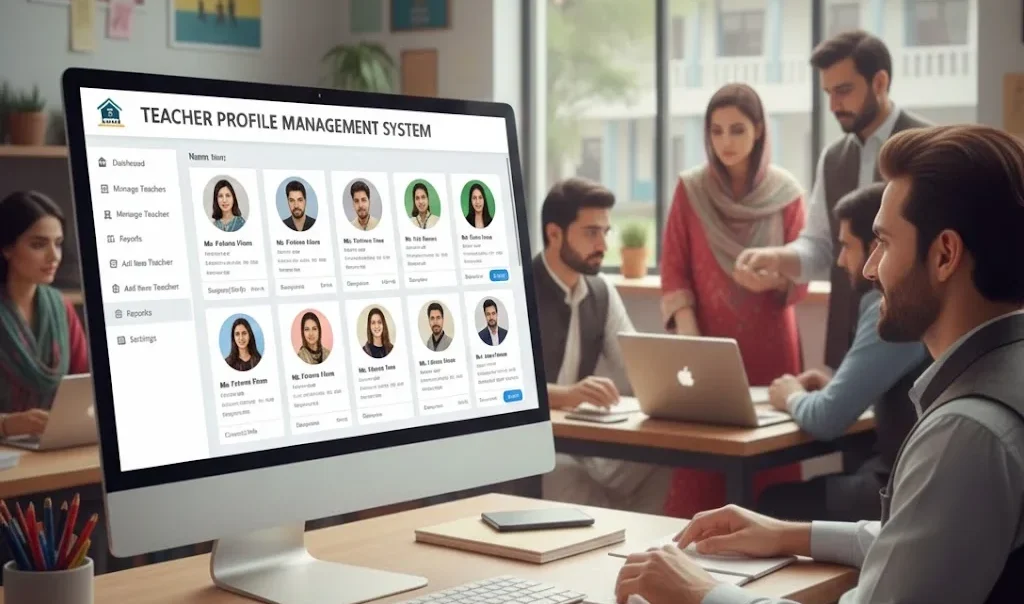
Are your teachers struggling to use your school ERP system effectively—even after implementation?
You’re not alone. Many schools in Pakistan invest in ERP systems expecting instant efficiency, only to face resistance from teachers who feel overwhelmed by new technology. According to a 2024 EdTech survey, nearly 70% of ERP failures in schools are linked to poor training and low user adoption.
The problem isn’t the software—it’s the training approach.
ERP training teachers is not just about showing buttons and dashboards. It’s about building confidence, reducing fear, and integrating technology into daily teaching workflows. In this guide, you’ll learn how to design practical, results-driven school staff training programs that drive real ERP adoption. You’ll also discover proven methods, real examples, and actionable steps to ensure your teachers not only use the system—but rely on it.
Why does ERP training teachers often fail in schools?
Before fixing the problem, you need to understand why it exists.
Most schools approach ERP training as a one-time event rather than an ongoing process. They conduct a single workshop and expect teachers to adapt instantly.
The real reasons behind failure
- Information overload in a short time
- Lack of hands-on practice
- No follow-up or support
- Fear of technology among senior staff
Real-world example
A school in Lahore conducted a full-day ERP training session for teachers. Within two weeks, most teachers reverted to manual processes because they couldn’t retain what they learned.
What I’ve learned
Training isn’t about delivering information—it’s about changing behavior. And behavior change takes time, repetition, and support.
Actionable takeaway
Shift your mindset:
- Replace one-time training with continuous learning
- Break training into smaller sessions
- Focus on practical usage, not theory
This alone can dramatically improve ERP adoption rates.
How should you structure an effective ERP training program?
A structured approach makes all the difference.
Instead of overwhelming teachers, design a step-by-step training program that aligns with their daily responsibilities.
H3: Phase-based training approach
Phase 1: Basic navigation
Start with simple tasks:
- Logging in
- Viewing dashboards
- Accessing student data
Phase 2: Core functions
Focus on daily tasks:
- Attendance marking
- Grade entry
- Report generation
Phase 3: Advanced usage
Introduce:
- Analytics dashboards
- Communication tools
- Custom reports
Case study
A Karachi-based school implemented phased training over 6 weeks. Instead of one long session, they held 2-hour weekly workshops. Result? Over 85% of teachers actively used the ERP system within two months.
Supporting data
According to Deloitte (2025), phased training improves software adoption rates by up to 60% compared to one-time sessions.
Actionable takeaway
Create a 4–6 week training roadmap:
- Week 1–2: Basics
- Week 3–4: Core tasks
- Week 5–6: Advanced features
This structured approach ensures better retention and confidence.
How can you overcome teacher resistance to ERP systems?
Resistance is natural—especially when teachers feel technology threatens their comfort zone.
The key is empathy, not enforcement.
Common concerns teachers have
- Fear of making mistakes
- Increased workload
- Lack of technical skills
Real-world example
In Islamabad, a school faced strong resistance from senior teachers during ERP rollout. Instead of forcing adoption, they introduced peer mentoring. Younger, tech-savvy teachers guided others informally.
Within three months, resistance dropped significantly.
What works best
- Create a safe learning environment
- Encourage questions without judgment
- Celebrate small wins
Expert insight
Change management studies (McKinsey, 2024) show that involving users early in the process increases adoption success by 70%.
Actionable takeaway
Implement a buddy system:
- Pair experienced teachers with beginners
- Provide ongoing support
- Recognize progress publicly
People adopt systems faster when they feel supported, not pressured.
What are the best tools and methods for school staff training?
Not all training methods are equally effective.
The goal is to make learning interactive, practical, and accessible.
Most effective training methods
- Hands-on workshops
- Video tutorials
- Step-by-step guides
- Live practice sessions
Case study
A Multan-based school created short 5-minute video tutorials for each ERP feature. Teachers could revisit them anytime. This reduced training dependency and improved confidence.
Why microlearning works
Research from LinkedIn Learning (2024) shows that microlearning improves retention by up to 50%.
Common mistake
Relying only on manuals or lectures. Teachers rarely engage with long documents.
Actionable takeaway
Build a simple training toolkit:
- Record short tutorial videos
- Create quick reference guides
- Schedule weekly Q&A sessions
Make learning accessible anytime, not just during training sessions.
How do you measure ERP adoption and training success?
If you’re not measuring progress, you’re guessing.
Tracking ERP adoption helps you identify gaps and improve your training strategy.
Key metrics to track
- Daily login rates
- Feature usage (attendance, grading)
- Error rates
- Teacher feedback
Example
A school in Faisalabad monitored ERP usage weekly. They found that only 60% of teachers were using the grading module. After targeted retraining, usage increased to 90%.
What I’ve learned
Data reveals what people won’t say. Teachers may nod in training sessions but struggle in practice.
Actionable takeaway
Set clear KPIs:
- 80%+ teacher login rate
- Full adoption of core features
- Monthly feedback collection
Use data to continuously improve your school staff training approach.
How can ongoing support improve long-term ERP adoption?
Training doesn’t end after implementation—it evolves.
Without ongoing support, even well-trained teachers can lose confidence over time.
What ongoing support looks like
- Dedicated ERP support team
- Regular refresher sessions
- Updates on new features
- Helpdesk or chat support
Case study
A private school in Lahore introduced monthly refresher sessions. Teachers could discuss challenges and learn new features. Over time, ERP usage became part of their daily routine.
Industry insight
Gartner (2025) reports that continuous support increases software adoption success by 40%.
Actionable takeaway
Create a support system:
- Assign an ERP coordinator
- Offer monthly training updates
- Provide instant help channels
Consistency is the secret to long-term success.
Conclusion
ERP systems don’t fail—training strategies do.
If you want successful ERP adoption, you must invest in structured, continuous, and practical ERP training teachers programs. From phased learning and microtraining to ongoing support and performance tracking, every step plays a critical role.
Start small. Focus on building confidence, not just skills. When teachers feel comfortable, adoption follows naturally.
Your next step? Evaluate your current training approach. Identify gaps, implement phased training, and build a support system that empowers your staff.
Because at the end of the day, technology only works when people use it effectively.
FAQ Section
What is ERP training teachers in schools?
ERP training teachers involves teaching educators how to use school ERP systems for daily tasks like attendance, grading, and communication effectively.
How long does ERP training take for teachers?
Typically, effective training takes 4–6 weeks with phased sessions, followed by ongoing support and refresher training.
Why is ERP adoption difficult in schools?
Resistance to change, lack of training, and fear of technology are the main reasons ERP adoption can be challenging.
What are the best methods for school staff training?
Hands-on workshops, video tutorials, and microlearning modules are the most effective training methods.
How can I improve ERP adoption in my school?
Focus on continuous training, provide support, and track usage metrics to identify and address gaps.
Is ERP training expensive for schools in Pakistan?
Not necessarily. Many cost-effective training methods like in-house sessions and video tutorials can reduce expenses.
Can older teachers adapt to ERP systems?
Yes, with proper support, mentoring, and gradual training, teachers of all experience levels can successfully adopt ERP systems.