
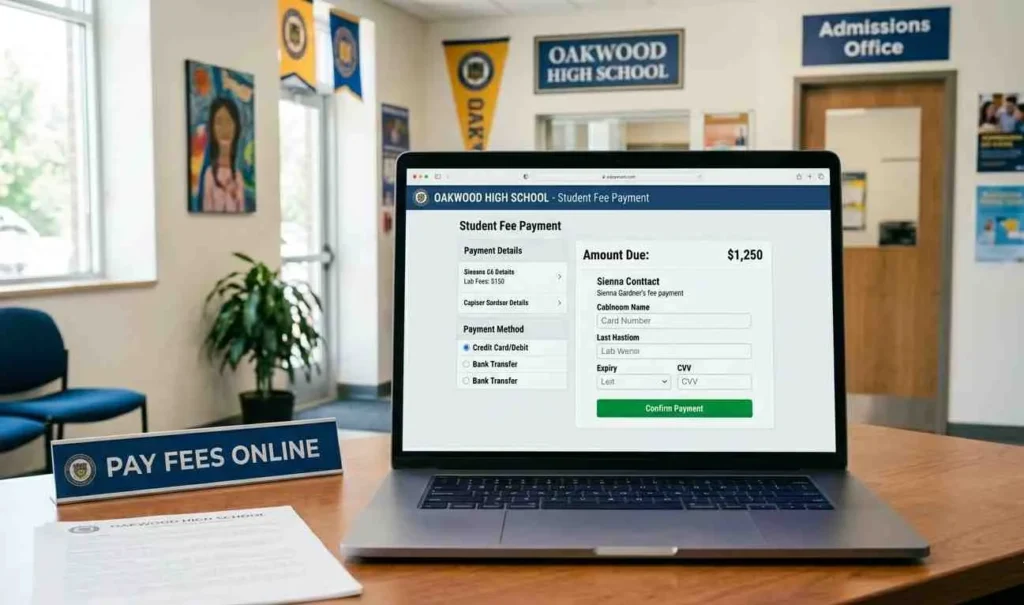
Are late fee payments, manual tracking, and constant parent follow-ups slowing down your school’s operations?
If that sounds familiar, you’re not alone. Across Pakistan, many schools still rely on outdated billing methods, leading to delayed payments and administrative chaos. According to a 2024 report by Statista, digital payments in Pakistan are growing by over 20% annually, yet adoption in education remains uneven.
That gap is exactly where Online Fee Payment Systems come in. These systems don’t just digitize payments—they transform how schools manage finances, improve cash flow, and enhance parent satisfaction.
In this guide, you’ll learn how digital school payments work, what features to look for, and how to implement a school billing system that actually delivers results. More importantly, you’ll walk away with practical steps you can apply immediately, even if you’re working with limited resources.
What are Online Fee Payment Systems and how do they work?
Online fee payment systems are digital platforms that allow schools to collect fees electronically through multiple channels like bank transfers, mobile wallets, and online portals.
Instead of relying on cash or manual bank slips, everything is processed and tracked digitally.
How the system works
- Parents receive digital fee invoices
- Payments are made via apps, bank portals, or cards
- Transactions are recorded instantly
- Schools access real-time financial data
Why this matters
Manual systems often create delays, errors, and reconciliation issues. A proper school billing system eliminates these inefficiencies.
Real-world example
A private school in Lahore transitioned to a digital fee system integrated with its ERP. Within three months, manual errors dropped by 90%, and administrative workload decreased significantly.
Actionable takeaway
Start by digitizing your fee structure:
- Create standardized digital invoices
- Enable multiple payment channels
- Track payments in real time
This lays the foundation for efficient digital school payments.
Why are online fee payment systems essential for schools in Pakistan?
The shift toward digital payments isn’t a trend—it’s a necessity.
Pakistan’s financial ecosystem is rapidly evolving, with mobile wallets and online banking becoming mainstream.
Key drivers of adoption
- Increased smartphone penetration
- Government push for digital economy
- Parent demand for convenience
According to the State Bank of Pakistan (2025), digital transactions have seen consistent double-digit growth year over year.
Case study
A Karachi-based school introduced online fee payments through mobile wallets. Within one academic year, over 70% of parents switched to digital payments, significantly reducing queues and delays.
Common challenge
Some schools worry about adoption rates. In reality, parents adapt quickly when systems are simple and reliable.
Actionable takeaway
Offer at least three payment options:
- Bank transfer
- Mobile wallet
- Online portal
Flexibility drives adoption.
How do digital school payments improve cash flow and efficiency?
Cash flow is the lifeline of any school. Delays in fee collection can disrupt operations and planning.
Digital school payments solve this by making collections faster and more predictable.
Key benefits
- Instant payment confirmations
- Automated reminders for due fees
- Reduced dependency on physical collection
- Accurate financial tracking
Supporting data
EdTech Magazine (2024) reports that schools using automated fee systems reduced late payments by up to 35%.
Example
A school in Faisalabad implemented automated reminders through its fee management software. Late payments dropped by 40% within one term.
What I’ve learned
The biggest improvement doesn’t come from technology alone—it comes from consistency. Automated reminders ensure no parent forgets deadlines.
Actionable takeaway
Set up:
- Pre-due date reminders
- Post-due follow-ups
- Monthly payment reports
These small steps dramatically improve cash flow.
What features should you look for in a school billing system?
Not all systems are created equal. Choosing the right one can make or break your implementation.
Must-have features
- Multi-channel payment integration
- Automated invoicing and reminders
- Real-time reporting dashboards
- Secure transaction processing
- Integration with school ERP system
Advanced features to consider
- Mobile app access for parents
- Custom fee structures
- Scholarship and discount management
Real-world example
An Islamabad school selected a billing system with parent app integration. Engagement increased significantly, and parents appreciated the transparency.
Common mistake
Schools often choose the cheapest option without evaluating scalability. That leads to problems later.
Actionable takeaway
Before selecting a system:
- List your current pain points
- Define must-have features
- Request demos from vendors
Investing in the right system saves time and money long-term.
How can schools implement Online Fee Payment Systems successfully?
Implementation is where most schools struggle—not because of technology, but because of poor planning.
Step-by-step approach
- Assess current billing processes
- Choose the right platform
- Train staff and communicate with parents
- Launch in phases
- Monitor and optimize
Case study
A school network in Multan rolled out its digital payment system in phases—starting with one grade level. This reduced resistance and allowed them to fix issues before full implementation.
What works best
Clear communication with parents is critical. If they don’t understand the system, adoption will be slow.
Actionable takeaway
During rollout:
- Provide simple user guides
- Offer support channels
- Collect feedback and improve
Smooth implementation ensures long-term success.
What are the security and compliance considerations?
Handling financial data requires strong security measures.
Parents need to trust that their transactions are safe.
Key security features
- SSL encryption
- Secure payment gateways
- Data privacy compliance
- Transaction audit trails
Industry insight
According to a 2025 cybersecurity report by KPMG, educational institutions are increasingly targeted due to weak digital systems—making secure payment solutions essential.
Talk to Our Experts Today
Instant support or book a free demo
Example
A Lahore school upgraded to a secure payment gateway after experiencing data inconsistencies. This improved trust and increased digital adoption.
Actionable takeaway
Always verify:
- Payment gateway certifications
- Data protection policies
- System reliability
Security isn’t optional—it’s foundational.
Conclusion
Managing school finances manually is no longer practical in today’s fast-moving digital environment.
Online fee payment systems offer a smarter, faster, and more reliable way to manage collections, improve cash flow, and enhance parent satisfaction. From reducing late payments to increasing transparency, the benefits are both immediate and long-term.
If you’re serious about improving financial efficiency, start small but start now. Begin with digital invoicing and basic payment options, then expand into a fully integrated school billing system.
Your next step? Evaluate your current process, identify gaps, and explore solutions that align with your school’s size and budget. The sooner you act, the sooner you’ll experience smoother operations and stronger financial control.
FAQ Section
What are Online Fee Payment Systems for schools?
They are digital platforms that allow schools to collect fees electronically through online portals, mobile apps, and bank integrations, replacing manual processes.
Are digital school payments secure?
Yes, most systems use encryption and secure gateways. Always choose platforms with verified security certifications.
Can small schools afford a school billing system?
Yes, many affordable solutions exist. Start with basic features and upgrade as your needs grow.
How do online systems reduce late payments?
Automated reminders and easy payment options encourage parents to pay on time, improving collection rates.
What payment methods should schools offer?
Ideally, include bank transfers, mobile wallets, and online portals to maximize convenience.
How long does implementation take?
Basic systems can be implemented within 2–4 weeks, depending on complexity and training.
Do Online Fee Payment Systems integrate with ERP?
Yes, most modern systems integrate seamlessly with school ERP systems for complete financial management.