
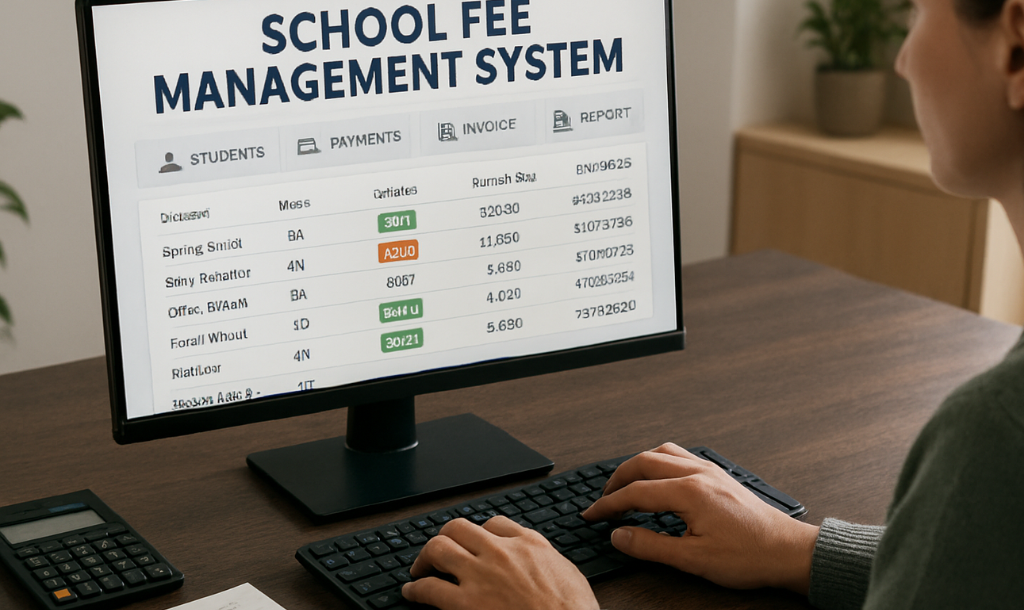
What would your school’s cash flow look like if every parent paid fees on time — without a single phone call, register chase, or awkward reminder from the receptionist?
For most private schools in Pakistan, that scenario feels like a dream. Fee collection remains one of the most time-consuming, stressful, and financially impactful aspects of running a school. The admin staff spends hours cross-checking payment registers. The principal chases defaulters manually at term-end. The accountant reconciles bank deposits against handwritten receipts at month-close — often finding discrepancies that take days to untangle.
Pakistan now has over 60 million mobile wallet accounts across JazzCash and EasyPaisa combined, with mobile banking transaction volumes having grown by over 100 percent year-on-year in certain recent periods according to the State Bank of Pakistan. The payment infrastructure parents need to pay fees digitally is already in their pockets. What most schools are missing is the system that connects their fee records to those payment channels automatically.
This guide explains exactly how a school ERP transforms school fee collection in Pakistan — reducing late payments, cutting admin workload, and giving school owners real-time visibility over their institution’s financial health.
Why Is Manual School Fee Collection Such a Problem in Pakistan?
Manual fee collection is a compound problem. Each individual task seems manageable. But the cumulative cost in time, errors, and lost revenue adds up fast.
When a school manages fees manually — through registers, Excel sheets, or a basic desktop software that isn’t connected to any payment gateway — every step in the process requires a human being. A staff member generates fee slips and distributes them to students. Parents bring cash to the school. The cashier records the payment, issues a handwritten receipt, and enters the transaction in a register or spreadsheet. The accountant reconciles that entry against the bank deposit later. At month-end, someone compiles defaulter lists by going through every student record one by one.
Each of those steps introduces the possibility of error: a miscalculation, a missed entry, a receipt that gets lost, a payment that was received but never recorded. Over a term with 500 students, even a two percent error rate means ten families with incorrect fee records — and all the conversations, corrections, and reputational friction that comes with it. There’s also the collection friction itself. A parent who wants to pay fees has to physically visit the school during office hours, find parking, wait in line, and interact with the cashier.
That friction delays payment — not because the parent doesn’t intend to pay, but because the process is inconvenient enough that it gets postponed one more day, one more week, until it becomes late.
How Does a Fee Management System Inside a School ERP Solve This?
A fee management system built into a school ERP doesn’t just digitize the cashier’s register. It restructures the entire school fee collection process from end to end.
Here’s what the workflow looks like in a modern school ERP like EduSuite or OurSchoolSoftware. At the start of each month, the system automatically generates fee invoices for every student based on the pre-configured fee structure — tuition, transport, exam fees, sibling discounts, and any other variables already set up during onboarding. Those invoices are sent to parents automatically via WhatsApp, with a payment link embedded. The parent opens their JazzCash or EasyPaisa app, taps the link, and pays. The system records the payment instantly, updates the student’s ledger, sends a digital receipt to the parent’s WhatsApp, and marks the student as paid in the dashboard — all without any manual intervention from school staff.
For parents who prefer traditional payment, the same school ERP generates a fee voucher that can be deposited at a bank counter. The system receives the payment notification through RAAST or a bank integration and reconciles it automatically. The accountant’s end-of-day job becomes reviewing a clean dashboard, not manually matching dozens of bank deposits against a handwritten register.
The practical result: what previously required three to four hours of daily admin time collapses into a five-minute morning review.
What Specific Features Reduce Late Payments in Pakistani Schools?
Late payments don’t usually happen because parents don’t want to pay. They happen because parents forget, because paying is inconvenient, or because no one follows up until it’s already a problem. A digital fee system addresses all three causes simultaneously.
Automated WhatsApp Reminders
The most effective late payment prevention tool in the Pakistani context is WhatsApp. Pakistani parents are highly responsive to WhatsApp messages — far more so than SMS or email. School ERP platforms with built-in school fee automation send reminders on a configured schedule: a first reminder three days before the due date, a second on the due date, and a third for overdue accounts. These messages arrive directly in the parent’s WhatsApp with the unpaid amount, the student’s name, and a payment link. For most parents, the reminder alone is sufficient to trigger immediate payment.
Automatic Late Fee Penalties
Instead of manually applying penalties to defaulter accounts at month-end — a process that requires identifying each late account, calculating the applicable penalty, and updating the record — a school ERP applies late fee penalties automatically based on rules you configure. A penalty of Rs. 100 per day after the 10th of the month, for example, is applied system-wide without anyone having to do anything. The transparency of automated penalties — where parents can see the accumulating balance in the fee portal — also creates a stronger incentive to pay on time than a penalty that only appears when someone remembers to apply it.
Real-Time Defaulter Reports
Rather than discovering at term-end that 15 percent of accounts are overdue, a school ERP shows the school owner and admin manager a live defaulter report updated in real time. You can see, at any moment, exactly how many students haven’t paid, how long each account is overdue, and how much total revenue is outstanding. This shifts the management posture from reactive — discovering the problem after it’s grown — to proactive, addressing it while accounts are still days overdue rather than months.
How Do JazzCash and EasyPaisa Integration Change the Game for Pakistani Schools?
This is the feature that has the most direct impact on fee recovery rates in Pakistan, and it’s worth understanding in specific terms.
Pakistan’s mobile wallet ecosystem is deeply embedded in daily life. JazzCash and EasyPaisa together account for over 60 million accounts, used daily for utility bills, grocery payments, and money transfers. When a school ERP integrates natively with these platforms, paying school fees becomes as simple as paying a phone bill. The parent receives a WhatsApp message, taps the payment link, authenticates with their mobile wallet PIN, and the transaction completes in under 30 seconds — at any time of day or night.
The impact on fee recovery is measurable and consistent. OurSchoolSoftware, one of Pakistan’s leading school ERP platforms, has reported that schools using WhatsApp-integrated payment reminders connected to JazzCash and EasyPaisa saw fee recovery rates improve by 40 percent. That figure reflects a structural change, not just a convenience upgrade: when paying is effortless and reminders are timely, the primary barrier to on-time payment disappears.
Schools that don’t offer mobile wallet payment options are, in effect, requiring parents to either visit the school during office hours or make a bank deposit — both of which create friction and delay. In 2025, that friction is unnecessary and avoidable.
What Does Better Fee Reporting Mean for School Financial Management?
School fee collection improvement isn’t just about getting money in faster. It’s about knowing exactly where your institution’s finances stand at any given moment.
A school ERP generates financial reports that manual systems can never match in speed or accuracy: daily fee collection summaries, class-wise outstanding balance reports, monthly revenue comparisons across terms, and fee head breakdowns showing how much tuition, transport, exam fees, and other categories are contributing to total income. These reports are available in real time, updated with every transaction, and exportable for accounting or audit purposes.
A school in Peshawar that switched from a manual system to a digital fee system discovered, in the first month of reporting, that their transport fee collection was running at only 62 percent of billed amounts — a gap that had existed for at least two years but had never been quantified because the manual system couldn’t separate fee type data easily. Within two months of automated reminders targeting only transport fee defaulters, that rate climbed to 89 percent. The data-driven visibility was the prerequisite for the improvement.
Talk to Our Experts Today
Instant support or book a free demo
Conclusion
School fee collection in Pakistan is a solvable problem — not through harder work, but through smarter systems. A school ERP with a properly configured fee management system eliminates the manual chase, connects directly with JazzCash, EasyPaisa, and RAAST so parents can pay in seconds, and gives administrators real-time visibility over who has paid, who hasn’t, and how much revenue is outstanding at any moment.
The schools making this change consistently see the same outcomes: higher on-time payment rates, lower admin workload, fewer fee disputes, and better financial clarity. The first step is evaluating your current system honestly — how many staff hours per month go into fee collection tasks that could be automated? Once you have that number, the case for switching becomes obvious.
Explore platforms like EduSuite, OurSchoolSoftware, or SowaanERP with a specific focus on their fee module. During your demo, ask them to show you JazzCash and EasyPaisa integration in action, demonstrate how WhatsApp reminders are configured, and walk you through what a defaulter report looks like in real time. Those three tests will tell you everything you need to know.
Related topics worth reading next: how to avoid school ERP mistakes during fee module setup, choosing the right school management software in Pakistan, and how to migrate from manual records to a school ERP system.
Frequently Asked Questions
What is a fee management system in a school ERP?
A fee management system is the financial module of a school ERP that automates invoice generation, payment collection, receipt issuance, and defaulter tracking. It replaces manual registers and cashier-driven collection with digital workflows connected to payment gateways like JazzCash, EasyPaisa, and RAAST — reducing errors and improving on-time payment rates.
How does school fee automation reduce late payments?
School fee automation reduces late payments by sending scheduled WhatsApp reminders before and after the due date, applying late fee penalties automatically, and offering parents the ability to pay digitally in under 30 seconds through mobile wallets. Removing the friction of physical payment combined with timely digital reminders addresses the two main reasons parents pay late: forgetting and inconvenience.
Can a school ERP integrate with JazzCash and EasyPaisa in Pakistan?
Yes. Leading Pakistani school ERP platforms — including EduSuite, OurSchoolSoftware, and CloudCampus ERP — integrate natively with JazzCash, EasyPaisa, SadaPay, RAAST, and HBL. Parents pay through their preferred mobile wallet, and the system records the payment, updates the student’s ledger, and sends a digital receipt automatically without any manual input from school staff.
How much does digital fee collection improve fee recovery?
Schools using WhatsApp-integrated payment reminders connected to digital wallets report measurable improvement in fee recovery. One school reported a 40 percent improvement in recovery rate after enabling WhatsApp fee reminders linked to JazzCash and EasyPaisa. The improvement reflects removal of payment friction and timely, personalized reminders that reach parents on the channel they’re most responsive to.
What reports does a school fee management system generate?
A school fee management system generates daily collection summaries, class-wise outstanding balance reports, fee head breakdowns by category, monthly revenue comparisons across terms, and real-time defaulter lists with days overdue and outstanding amounts. These reports replace manually compiled Excel summaries and are available instantly, updated with every transaction, and exportable for accounting or audit use.