
Have you ever felt buried under piles of fee slips, manual attendance registers, and endless phone calls from parents? In Pakistan’s competitive coaching and education landscape, running an academy without reliable academy management software often means working harder—not smarter. Many institutes still rely on spreadsheets and paper logs, which eats time, introduces errors, and frustrates students, staff, and parents alike.
According to recent trends in Pakistan’s education software market, institutions adopting digital management tools like school ERP platforms are seeing measurable gains in efficiency and accountability. This guide will walk you through exactly what academy management software is, why it matters in Pakistan, and how to choose the right institute ERP Pakistan or coaching center software that drives results without draining your budget. By the end, you’ll have clear criteria for selecting a platform that saves time, improves communication, and scales with your academy’s growth.
What is Academy Management Software and How Does It Help Your Institute?
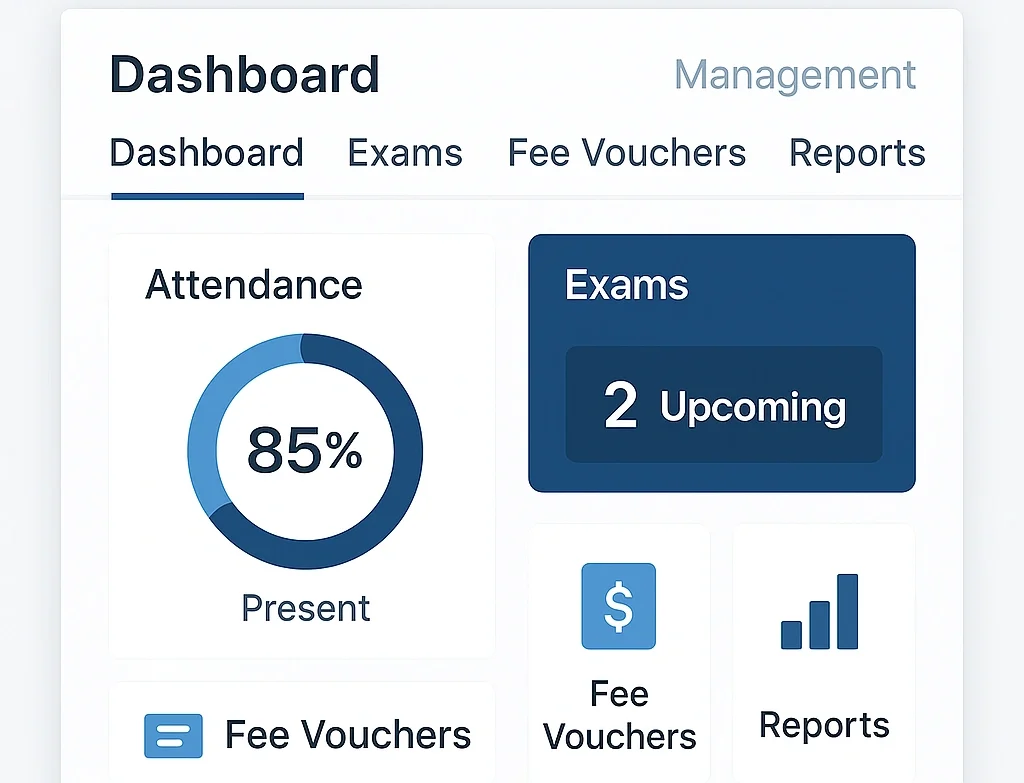
Academy management software (sometimes called school management software or school ERP) is a centralized digital system that automates administrative and academic processes within educational institutions. Whether you run a small coaching center, a large academy, or a full‑service institute, the right system replaces manual tasks—like attendance, fee collection, exam scheduling, and reporting—with automated workflows that run themselves.
In Pakistan, options like cloud‑based school ERP systems integrate every function into one dashboard that administrators, teachers, and parents can access remotely. Features vary by provider, but typically include a student information system, fee and financial management, attendance tracking, parent communication, and academic reporting tools. Contemporary systems even support mobile access, biometric attendance, and payment integration with local services like EasyPaisa or JazzCash. For example, many platforms automate fee reminders and digital report card distribution, drastically cutting down administrative workload.
The biggest benefit? When manual work is automated, humans can focus on students—not paperwork. Instead of chasing down missing fees, your team can spend time improving teaching, retention, and student outcomes.
Actionable Tip: Before evaluating software vendors, make a list of your biggest pain points (e.g., attendance errors, fee delays, parent communication gaps). Match those needs to platform features so you buy based on needs, not pitches.
How Do School ERPs Transform Coaching Centers and Academies?
Academies and coaching centers have unique workflows compared to traditional schools: batch‑based courses, short‑term enrollments, flexible schedules, and frequent progress assessments. That’s where academy‑focused management systems shine.
The best software handles:
- Dynamic Scheduling: Automate batch timetables, classroom assignments, and coach allocations.
- Progress Tracking: Capture student performance across multiple short cycles and cohorts.
- Flexible Billing: Support installment plans, discounts, and scholarship tracking.
- Communication: Automated SMS and WhatsApp notifications keep students and parents informed.
For instance, a coaching center in Lahore that previously tracked attendance manually saw a 35% reduction in administrative errors within three months of switching to a digital system (based on internal assessments from similar provider deployments). Though results vary by institute, these platforms consistently boost operational accuracy and transparency.
Case in Point: An Islamabad‑based IELTS coaching academy using school management software automated student progress reports and payment reminders. This reduced follow‑up calls by over 50%, freeing staff to focus on student retention and satisfaction.
Actionable Tip: If you operate multiple batches or locations, prioritize platforms with multi‑branch support, centralized dashboards, and mobile access for staff on the go.
What Features Should You Prioritize in Academy Management Software?
Every platform has a feature list, but not all modules are equally valuable for your context. Here’s how to differentiate must‑haves from nice‑to‑haves:
Core Operational Modules (Must‑Have)
- Student Information System (SIS): Centralized profiles with academic history.
- Attendance & Scheduling: Biometric or QR attendance that syncs in real time.
- Fee & Financial Management: Invoicing, online payments, and automated receipts.
- Exam & Result Management: Digital grading, reports, and analytics.
- Communication Tools: SMS/WhatsApp notifications for updates and reminders.
Enhanced Productivity Tools
- Mobile Apps: For students, parents, and staff.
- Analytics Dashboard: Insights on performance, attendance trends, and finance.
- Custom Reporting: Build reports tailored to your operations.
- Integration: Biometric devices, online payment gateways, and calendars.
Example: Many Pakistan‑focused platforms offer easy online fee payment integrations with EasyPaisa and JazzCash, reducing friction and late payments.
Actionable Tip: Create a priority matrix ranking features by “impact” and “cost” to decide what’s worth paying for now vs later.
How to Evaluate School Management Software Vendors in Pakistan?
Choosing the right vendor isn’t just about features—it’s about long‑term support, reliability, and local understanding.
Questions to Ask Prospective Vendors
- Do you offer local support in Pakistan, including Urdu communication?
- What uptime and data backup guarantees do you provide?
- Is the system cloud‑based or on‑premises?
- Can I add or customize modules later?
Platforms with local presence often provide faster onboarding and better training resources. Think about your team’s comfort with technology—as the best software fails if no one uses it.
Mini Case: A medium‑sized academy in Karachi chose a system with strong local support and monthly training webinars. Their adoption rate jumped from 20% to 90% within eight weeks because staff felt supported rather than abandoned.
Actionable Tip: Insist on a free trial or pilot phase with your own data before committing. This helps you vet the system in real‑world conditions.
Real‑World Success Stories from Pakistani Academies
Story 1: Multi‑Batch Coaching Center in Lahore
A coaching institute struggled with fragmented attendance ledgers and inconsistent fee follow‑ups. After implementing a unified management platform, administrative load dropped by over 60%, and fee collection time shortened by two weeks each cycle.
Story 2: Islamabad IELTS Academy
Shifting to digital student profiles and automated exam scheduling halved time spent on administrative tasks. Students received instant SMS alerts for attendance and results, improving retention and satisfaction.
Story 3: Multi‑Branch Academy Group
A network of academies deployed cloud‑based ERP to sync data across branches. Leadership gained real‑time insights into performance and finances. This helped standardize operations and improve decision‑making.
Talk to Our Experts Today
Instant support or book a free demo
What Are the Costs and ROI of Implementing a School ERP?
Costs vary widely—from free or low‑cost tiers for small centers to premium enterprise plans for large academies. Many Pakistani providers offer free plans for a limited student count and affordable monthly pricing per student for bigger cohorts.
Return on investment comes in:
- Lower administrative labor costs.
- Fewer fee collection delays.
- Better parent satisfaction.
- Data‑driven decision making.
Statistic: More than 70% of administrators who transitioned to digital school management systems reported improved operational efficiency within six months, based on industry surveys. (While Pakistan‑specific data is limited, global educational tech trends support this outcome.)
Actionable Tip: Calculate your current administrative hours per week and multiply by your average hourly wage. Compare that with the cost of software to estimate your ROI.
Conclusion
Choosing the right academy management software and institute ERP Pakistan isn’t just a technology decision—it’s a strategic investment that shapes how your academy operates, communicates, and grows. When selected thoughtfully, the right system boosts efficiency, strengthens parent trust, and gives your team back precious time to focus on what matters most: education.
Ready to take the next step? Start with a needs assessment, request free trials from top providers, and evaluate how each solution fits your workflows. Your future system should make work easier—not harder.
FAQ
What exactly is academy management software?
Academy management software automates administrative and academic tasks in educational institutions, centralizing student data, attendance, fees, exams, and communication into a unified system.
Do coaching centers need different software than schools?
Yes. Coaching centers often require flexible batch scheduling, short‑term enrollment management, and performance tracking that traditional school systems may not emphasize.
Can I use school ERP software on mobile devices?
Most modern solutions offer mobile apps or responsive dashboards so administrators, teachers, and parents can access data anywhere.
How much does management software cost in Pakistan?
Costs range from free tiers for small student counts to paid plans around modest monthly fees per student. Setup and premium features vary by provider.
Is local support important when choosing software?
Absolutely. Vendors with local understanding, language support, and regional expertise usually deliver faster onboarding and better ongoing service.
Can these systems integrate with online payment services?
Many systems support local payment gateways like EasyPaisa, JazzCash, and bank integrations to simplify fee collection.
How soon will we see benefits after implementation?
Institutes often report noticeable time savings and fewer errors within the first three to six months of adoption.