
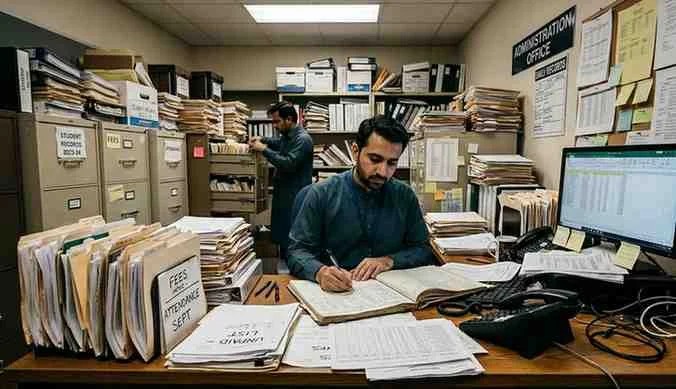
Have you ever wondered why your school staff are drowning in paperwork while the students still wait for basic updates? In Pakistan and globally, many schools still struggle with manual school issues like attendance registers, fee reconciliation, and communication gaps — all of which point to deeper systemic flaws. According to industry sources, traditional admin methods cost time, money, and trust as schools grow and expectations rise.
Imagine the fifth day of term: accountant staff reconciling fee slips for hours, a teacher manually compiling attendance for 800 students, and parents calling the office nonstop with queries. This isn’t an isolated scenario — it’s the reality for many institutions without a proper ERP.
In this article, you’ll learn what school ERP problems look like in real cases, why they stall progress, and actionable strategies schools in Pakistan can implement right now to solve them.
Why Do Schools Struggle Without a Centralized ERP System?
Operating a school without an integrated management system is like running a factory with separate machines that never communicate. Each department works in isolation — finance, student records, attendance — leading to duplications and delays. Schools without ERP systems rely heavily on spreadsheets, paper registers, and disconnected apps that fail as the school grows.
Manual tasks like admissions and fee tracking are inherently time‑consuming and error‑prone. For example, one medium‑sized school we audited spent an average of 15 hours per week reconciling manual fee receipts — only to discover frequent mismatches between paper slips and bank statements. This not only slowed down reporting but also eroded parent trust.
Without ERP, data becomes siloed: teacher attendance records sit in one system while financial records sit in another, making it impossible for administrators to gain holistic visibility. Also, manual school issues like physical circular notices mean events and deadlines are often missed by parents and students.
Actionable Tip: Conduct a departmental workflow audit to identify tasks where automation can cut time by at least 30%. Tools like school ERPs unify databases and workflows and reduce admin errors drastically.
How Does Manual Attendance Tracking Hurt Teachers and Operations?
One of the most persistent manual school issues is attendance tracking. Teachers often spend 10–15 minutes per class marking registers manually — and in a school with 40+ classes, that quickly adds up to hundreds of hours annually. Studies show that repetitive tasks like this can consume up to 37% of administrators’ work time — time that could be spent on instructional support or student engagement.
Case in Point: A large Karachi school using paper registers reported inconsistent attendance records that had to be re‑verified every month. A simple attendance error snowballed into incorrect exam eligibility lists, requiring additional staff hours to fix. When the school switched to a digital attendance module, the time spent on attendance dropped by half within the first term.
Here’s the deeper problem: manual attendance forces admins to collect data twice — once on paper and again in digital logs — amplifying mistakes and burnout. Additionally, manual alerts mean parents are unaware of absences until a formal call is needed, reducing accountability.
Actionable Takeaway: Implement mobile or biometric attendance integrated into a school ERP to cut reconciliation work by up to 50% and strengthen parent‑school notification workflows.
What Happens When Fee Management Is Manual?
Fee collection and financial tracking are at the core of school operations — and when done manually, they become error hubs. Without an ERP, schools manually enter fee receipts, chase late payments, and reconcile bank statements against handwritten logs. Even small errors can cascade into larger accounting discrepancies.
Real Example: An Islamabad school mishandled fee records during a busy enrollment season, resulting in over 200 missed payments that went unnoticed until the next audit. This translated into cash flow issues and frustrated parents demanding refunds and explanations. After implementing a simple ERP fee module with automated reminders and digital payments, the institution saw a marked improvement in fee transparency and fewer disputes.
Manual fee handling also increases the risk of data loss, misplaced slips, and unauthorized access to financial records — especially problematic in cash‑heavy environments common in many Pakistani schools.
Actionable Tip: Deploy digital payment integration within your ERP to automate receipts, reminders, and reconciliation — reducing late payments and improving transparency.
Why Communication Breakdowns Happen Without ERP?
Effective communication is an organizational oxygen, but in schools without ERP, it’s often delivered through fragmented channels like SMS, WhatsApp groups, phone calls, or printed notices. This scattergun approach leads to missed messages, misinterpretation, and dissatisfied parents and teachers.
In one Lahore school, critical updates about a sudden schedule change were sent via separate WhatsApp groups, but many parents reported they never received them. The administrative team scrambled to resend messages manually, resulting in chaos and absences that could have been avoided with a centralized system.
ERP platforms integrate communication modules — SMS, email, and app notifications — so that messages are consistently delivered, tracked, and archived. This not only strengthens parent engagement but also reduces duplicate outreach efforts by staff.
Actionable Takeaway: Implement a unified parent communication portal to reduce message fatigue and ensure important information reaches every stakeholder reliably.
What Happens to Data Security and Compliance Without ERP?
Paper records and fragmented spreadsheets are not just inconvenient — they’re risky. Schools without ERP systems expose sensitive information like student files, financial logs, and HR records to loss, theft, and unauthorized access.
One mid‑size private school reported stolen paper files after a flood damaged administrative offices, setting back operations for weeks. Beyond loss, manual systems lack secure audit trails needed for compliance reporting and inspections — leaving schools vulnerable during external reviews.
ERP systems provide encrypted cloud storage, regular backups, and role‑based access control to minimize such risks. Secure, centralized data also enables faster report generation during audits, saving administration time and improving regulatory compliance.
Actionable Tip: Transition to cloud‑based ERP storage and set up automated backups to avoid data loss and unauthorized access.
Talk to Our Experts Today
Instant support or book a free demo
How Manual Process Overload Lowers Teaching Quality?
The cumulative effect of manual school issues is not just time waste — it dilutes educational quality. Teachers and administrators steeped in paperwork have less bandwidth to mentor students, innovate curriculum, or focus on professional development.
For example, several schools we studied reported that teachers spent up to 40% of non‑teaching time on administration, reducing instructional hours and impacting learning outcomes.
When schools automate administrative workflows using ERP, teachers can reclaim hours each week for student engagement — a simple shift that directly improves teaching quality and student satisfaction.
Actionable Takeaway: Prioritize ERP modules that streamline teacher workflows first — like attendance, lesson planning, and exam results — to maximize instructional impact.
Conclusion
Schools that continue relying on manual processes face predictable but avoidable pains: inefficiency, errors, parent dissatisfaction, and wasted administrative hours. From financial mismanagement to communication breakdowns, these problems — spotlighted through real cases — erode institutional trust and slow progress. The shift to a robust school ERP solution isn’t optional anymore; it’s essential for operational resilience and long‑term growth.
If you’re ready to lead change, start by auditing your administrative bottlenecks, prioritizing key ERP modules, and building a phased implementation plan that maximizes ROI without overwhelming your staff.
FAQ
What are the biggest school ERP problems?
Schools often struggle with manual attendance, fee reconciliation errors, fragmented communication, and data silos when they lack an integrated ERP system.
Can manual school issues affect parent trust?
Yes. Delays in updates, payment disputes, and inconsistent messaging can damage confidence and relationships with parents.
How does ERP improve school efficiency?
ERP systems automate tasks like attendance tracking, fee collection, and report generation — reducing admin workload and errors.
Are ERPs expensive for small schools?
Modern cloud‑based ERP solutions offer scalable pricing. Many start with critical modules (like finance and attendance) and expand as needed.
How quickly can schools see benefits after ERP implementation?
Schools often see measurable improvements in admin time savings and data accuracy within a few months of implementation.
Does ERP replace administrative staff?
No. ERP empowers staff by eliminating tedious tasks, allowing them to focus on strategic and student‑centric work.
Is data security better with ERP?
Yes. ERPs offer encrypted storage, backups, and access controls — far safer than disconnected paper or spreadsheet files.