
Have you ever felt overwhelmed trying to track student progress, missing out on essential feedback, or struggling to maintain accurate records in a traditional, paper-based system? If you are an educator or school administrator in Pakistan, chances are you’ve faced these challenges. From untidy student records to the difficulty of tracking grades efficiently, traditional grading methods are often inefficient and prone to errors.
In a rapidly evolving digital landscape, it’s time to move towards more streamlined and reliable systems that not only benefit students but also make life easier for educators. Enter the digital gradebook, an innovative solution that transforms the way academic progress is managed and tracked. In this post, we’ll explore why online gradebooks are essential for student success in Pakistan, how they streamline grading, and why they are critical for improving educational outcomes.
By the end of this post, you’ll gain a deeper understanding of how online gradebooks help track student progress effectively, enhance student engagement, and support better learning environments for both educators and students.
What Are Online Gradebooks and How Do They Work?
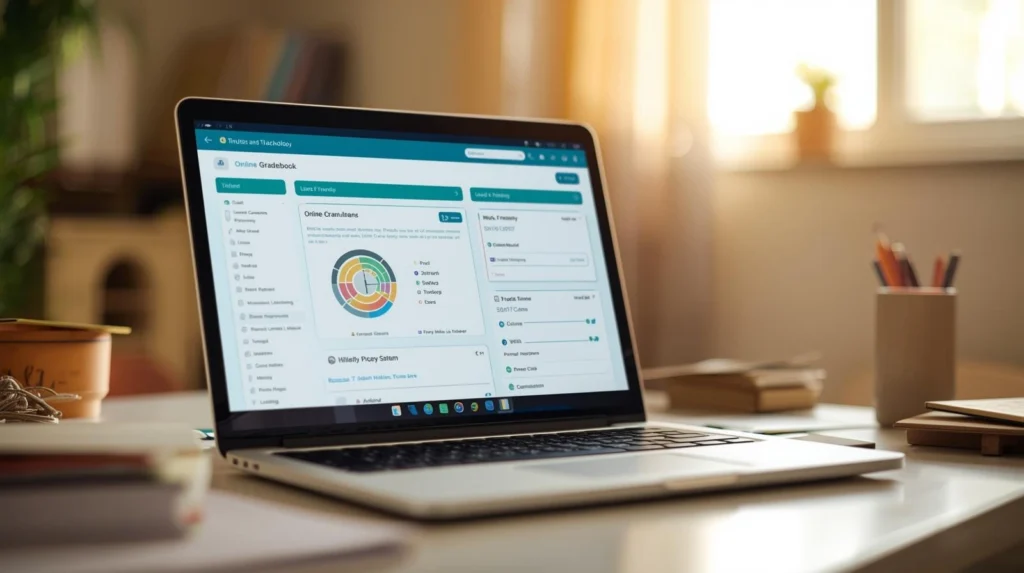
An online gradebook is a digital tool used by educators to record, track, and manage students’ grades and assignments. Unlike traditional gradebooks that rely on paper and manual calculations, digital gradebooks store all student information in a secure online environment, providing easy access to both teachers and students.
Online gradebooks integrate with student information systems (SIS), allowing schools to track attendance, assignments, test results, and more, all in one place. They offer real-time updates, providing immediate access to performance data, which can be accessed by students and parents from anywhere.
Pro Tip: In Pakistan, where digital transformation is gaining momentum, schools that implement online gradebooks can ensure transparency and improve communication between teachers, students, and parents, which is crucial for maintaining accountability.
How Do Digital Gradebooks Improve Student Progress Tracking?
One of the most significant advantages of digital gradebooks is their ability to track student progress efficiently. With just a few clicks, teachers can input grades, assess assignments, and monitor overall performance trends. The system automatically calculates averages and provides valuable insights into where each student stands academically.
For example, schools in Pakistan, such as Roots International Schools and Colleges and Bay View Academy, have successfully implemented digital gradebooks to reduce administrative burden and offer timely feedback to students. This allows teachers to intervene early when students are struggling, rather than waiting until the end of the semester.
Actionable Tip: Make sure to use the automated analytics features of online gradebooks to monitor patterns in student performance over time. By identifying trends early on, you can offer targeted support to struggling students, helping them improve before final exams.
Talk to Our Experts Today
Instant support or book a free demo
How Do Digital Gradebooks Help with Parent Communication?
In Pakistan, where strong family engagement in education is essential, digital gradebooks facilitate seamless communication between schools and parents. Parents can log in to the system to view their child’s grades, attendance, and progress in real-time. This keeps parents informed, allows for proactive discussions about academic issues, and enhances collaboration between home and school.
Real-world examples show how schools that have integrated digital gradebooks into their systems have seen a noticeable improvement in parent involvement. International Grammar School in Lahore and Beaconhouse School System have already adopted such technologies, ensuring that parents remain actively engaged in their children’s academic journey.
Pro Tip: Encourage parents to use the online gradebook regularly to track their child’s progress. Providing them with this access can help foster a stronger partnership between parents and educators, ultimately benefiting student success.
What Are the Key Benefits of Online Gradebooks for Teachers?
Teachers in Pakistan often face a significant amount of administrative work, from grading papers to compiling reports. Digital gradebooks alleviate this burden by automating several processes, such as calculating final grades and generating reports. This saves teachers valuable time that can be spent on instruction and student interaction.
Moreover, digital gradebooks allow teachers to share assignments and grades electronically, eliminating the need for paper. This not only reduces costs but also contributes to a more sustainable and eco-friendly approach.
Case Study: At Lahore Grammar School, the integration of student information systems (SIS) and digital gradebooks allowed teachers to save hours each week, which was redirected towards personalized lesson planning and engaging with students more effectively.
Can Online Gradebooks Improve Student Accountability?
When students have access to their grades and progress reports online, they become more accountable for their learning. By providing a clear, up-to-date picture of their academic standing, digital gradebooks empower students to take ownership of their education.
In Pakistan, where educational systems are often under pressure to improve results, student accountability is key. Students can track their own progress and identify areas of weakness, which motivates them to improve and stay on top of their coursework.
Pro Tip: Encourage students to check their grades regularly and engage with teachers to ask for feedback. This not only boosts accountability but also helps students feel more engaged and responsible for their success.
How Do Online Gradebooks Facilitate Better Decision-Making?
In educational institutions across Pakistan, administrators and teachers often need to make important decisions regarding students’ academic futures. With online gradebooks, educators have immediate access to comprehensive data that can guide these decisions.
For example, the data provided by digital gradebooks can inform decisions about whether a student needs additional support, whether a class is performing well, or whether certain assignments or assessments need to be revised for clarity. With up-to-date data at their fingertips, educators can make more informed and accurate decisions.
Expert Insight: According to a 2023 report by the Punjab Education Department, schools that utilized student information systems (SIS) with digital gradebooks reported a 20% increase in academic performance due to more data-driven decision-making.
Are Online Gradebooks Cost-Effective for Schools in Pakistan?
As schools in Pakistan transition to digital platforms, cost-effectiveness is a significant concern. However, the long-term benefits of online gradebooks far outweigh the initial investment. Schools save money on paper, printing, and administrative time. Additionally, teachers can spend less time on manual calculations and more time teaching.
Moreover, digital gradebooks can scale with the growth of the school, allowing administrators to easily manage larger student populations without additional resources.
Pro Tip: Consider starting with a free or low-cost digital gradebook platform, like Google Classroom, and gradually upgrade as your school grows. Many digital gradebook systems are scalable and can be customized to suit the needs of both small and large educational institutions.
Conclusion
As the educational landscape in Pakistan continues to evolve, adopting digital gradebooks has become essential for fostering student success. From improving student progress tracking to enhancing parent communication and boosting teacher productivity, online gradebooks provide an invaluable tool for educators and students alike.
By embracing digital gradebooks, Pakistani schools can streamline grading, improve academic outcomes, and foster a more engaging and accountable learning environment. If you haven’t yet implemented a digital gradebook in your school, now is the time to take the first step towards improving student success and creating a more efficient educational system.
FAQ Section
1. What is an online gradebook?
An online gradebook is a digital tool used by teachers to manage and track student grades, attendance, and performance. It allows for real-time updates and easy access for both educators and students.
2. How do digital gradebooks help teachers?
Digital gradebooks save teachers time by automating grading processes, providing instant access to data, and allowing for better lesson planning and student interaction.
3. Can digital gradebooks be accessed by parents in Pakistan?
Yes, many online gradebooks offer parent access, allowing them to monitor their child’s academic progress, attendance, and assignments in real-time.
4. How do digital gradebooks improve student accountability?
By giving students access to their grades and progress reports, digital gradebooks help students track their own academic performance and take ownership of their learning.
5. Are online gradebooks cost-effective for schools in Pakistan?
Yes, online gradebooks save money on paper, printing, and administrative time, making them a cost-effective solution for schools of all sizes.
6. Can online gradebooks improve student engagement?
Yes, digital gradebooks make it easier for students to monitor their own progress, which leads to higher engagement and accountability in their academic journey.
7. What is the best digital gradebook platform for Pakistani schools?
There are several options available, including free platforms like Google Classroom and Edmodo, as well as paid platforms like PowerSchool and Blackboard, depending on the size and needs of the institution.