A New Era for School Management in Pakistan
Are you tired of managing endless spreadsheets, manually tracking student performance, and juggling communication between teachers, students, and parents? If so, you’re not alone. Many educational institutions in Pakistan are still relying on outdated processes that lead to inefficiencies, errors, and a lot of frustration.
But here’s the good news: the rise of Smart School ERP is revolutionizing school management. With the latest versions offering robust automation, insightful analytics, and user-friendly interfaces, this software is designed to ease your daily operations. Whether you’re running a small private school or a large educational institution, Smart School ERP could be the solution you’ve been searching for.
In this blog, we’ll explore the latest Smart School ERP features and how they’re helping schools across Pakistan enhance their operations, save time, and make data-driven decisions.
What is Smart School ERP, and Why Is It Essential?
A Smart School ERP (Enterprise Resource Planning) system is a comprehensive software solution designed to automate and streamline various functions within educational institutions. From attendance tracking and grade management to fee collection and communication between parents and teachers, a Smart School ERP consolidates all aspects of school administration into one centralized platform.
For educational institutions in Pakistan, where administrative tasks often overwhelm staff and slow down operations, a Smart School ERP offers a practical solution to improve efficiency.
Benefits of Smart School ERP for Pakistani Schools
- Automation of daily administrative tasks
- Real-time data analytics for better decision-making
- Seamless communication between teachers, parents, and students
- Improved compliance with regulatory requirements
- Cost efficiency by reducing manual labor and paper usage
How Does Automation Streamline School Operations?
One of the standout features of Smart School ERP is automation. From student registration to fee collection, this system automates multiple tasks that would traditionally require considerable manual effort.
For example, in many schools across Pakistan, teachers spend a lot of time entering attendance manually. Smart School ERP systems can automate this process through biometric or digital check-ins, ensuring that attendance is recorded in real time and reducing errors.
Pro Tip: Choose an ERP system that integrates with biometric devices and smart cards for seamless attendance tracking. This minimizes human error and maximizes efficiency.
Automation also extends to grading systems, where teachers can enter grades into the system and have them automatically compiled, removing the need for manual calculations. Not only does this save time, but it also ensures that there are no discrepancies in grade reporting.
How Does Analytics Enhance Decision-Making in Schools?
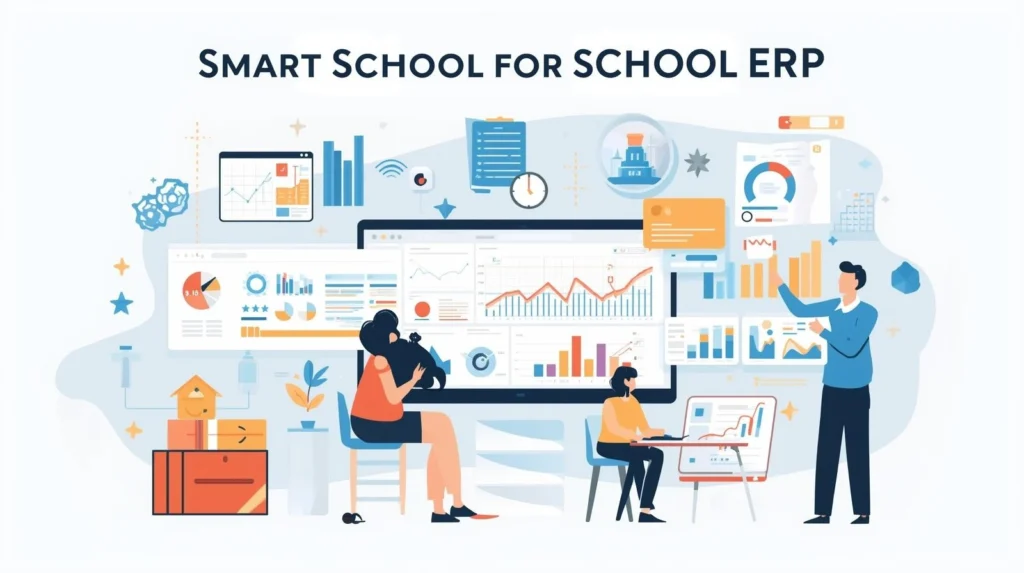
In the past, many schools relied on anecdotal evidence or outdated reports to make important decisions. But with Smart School ERP, you can access real-time, data-driven insights that help make better choices for your institution’s future.
For instance, analytics tools within the ERP system can track student performance, attendance, and behavior trends. With this data, school administrators can quickly identify students who are struggling and provide interventions before problems escalate.
Case Study: A private school in Lahore implemented a Smart School ERP system to track student performance. Using the built-in analytics, they discovered that a significant portion of their students were underperforming in math. By addressing the issue early with additional resources and support, the school was able to significantly improve their students’ academic outcomes.
Furthermore, analytics can help schools better manage their financial health. With detailed reports on fee collections, expenditures, and budget forecasts, school managers can make informed decisions about resource allocation and financial planning.
What Makes Smart School ERP User-Friendly?
Ease of use is a critical factor in choosing the right ERP system for your school. A Smart School ERP must be intuitive, accessible, and easy for teachers, students, and administrators to use without extensive training.
Most modern Smart School ERP systems come with:
- User-friendly dashboards: These allow teachers and staff to quickly access the information they need.
- Mobile compatibility: Given the growing mobile usage in Pakistan, many ERP systems are now designed to work seamlessly on smartphones, enabling school staff to access critical data anytime, anywhere.
- Role-based access control: Teachers, students, and administrators can have different access levels depending on their roles. For example, a teacher may only have access to student grades, while an administrator has full access to all school data.
Expert Insight: Before selecting an ERP, make sure to test the user interface for ease of navigation. Choose a system with customizable features that match your institution’s unique needs.
How Can Communication Be Improved Through Smart School ERP?
Effective communication is key to a school’s success. Whether it’s sharing announcements with students, sending report cards to parents, or communicating with teachers, Smart School ERP ensures all stakeholders are on the same page.
Some of the key features include:
- Instant messaging: Teachers and parents can message each other directly through the system.
- Automatic notifications: Parents are notified when their child’s attendance drops below a certain threshold or when report cards are available.
- Parent portal: A dedicated portal where parents can view their child’s progress, attendance, and even communicate with teachers.
Pro Tip: Look for an ERP system that integrates email and SMS capabilities for communication, making it easier to stay connected with parents who may not be frequent app users.
What Are the Key Features of the Latest Version of Smart School ERP?
The latest version of Smart School ERP systems come packed with several new and advanced features designed to take educational institutions to the next level.
Some of the top features include:
- AI-driven student performance tracking: The ERP uses AI to predict future academic outcomes and suggests interventions.
- Cloud-based data storage: All your data is stored securely in the cloud, ensuring it’s accessible from anywhere while also being protected from local data loss.
- Customizable reports: Schools can create reports that meet their unique requirements, such as tracking specific learning outcomes or compliance with local educational standards.
How Does Smart School ERP Ensure Compliance with Local Regulations?
For schools in Pakistan, compliance with education regulations is non-negotiable. Smart School ERP systems are designed to keep schools up-to-date with local regulatory requirements. From the Fee Collection Act to Academic Progress Reporting, ERP systems can automatically generate reports that help institutions comply with local laws.
Example: Schools in Punjab can use ERP to generate reports for the Punjab Education Department’s required annual reporting. This feature saves administrative time and ensures that all necessary information is reported accurately.
What Are the Cost Implications of Implementing Smart School ERP in Pakistan?
Many schools in Pakistan may worry about the costs of implementing a Smart School ERP system. However, considering the efficiency gains, the upfront investment often pays off in the long run.
While some systems come with licensing fees, others are offered as subscription-based models. Schools can choose a plan based on their budget, ensuring they get the features they need without overpaying.
Pro Tip: Start with a basic version of Smart School ERP and gradually upgrade as your institution’s needs grow. This way, you can manage costs while still enjoying the benefits of automation and analytics.
Conclusion: The Future of School Management in Pakistan
In conclusion, the latest Smart School ERP systems are not just a trend—they are essential tools that transform how educational institutions in Pakistan manage their operations. With automation streamlining tasks, analytics enabling data-driven decisions, and ease of use improving daily workflows, Smart School ERP offers a comprehensive solution to the challenges faced by schools today.
By implementing a Smart School ERP system, you can save time, reduce errors, and provide a better educational experience for students and teachers alike. So, if you’re ready to take your school’s management to the next level, it’s time to consider investing in a Smart School ERP system.
Talk to Our Experts Today
Instant support or book a free demo
FAQ: Common Questions About Smart School ERP
1. What is the cost of implementing Smart School ERP in Pakistan?
The cost varies depending on the features and the number of users. Subscription models can range from a few thousand rupees per month to more, while on-premise systems may require a larger upfront investment.
2. Can Smart School ERP integrate with existing school systems?
Yes, many Smart School ERP systems are designed to integrate with existing systems like student databases, accounting software, and email communication tools.
3. How does Smart School ERP handle student performance tracking?
Smart School ERP tracks student performance by automatically logging grades, attendance, and behavioral data. Analytics tools allow teachers and administrators to quickly identify trends and make data-driven decisions.
4. Can parents access their child’s data through the ERP system?
Yes, most Smart School ERP systems include a parent portal where parents can monitor their child’s progress, attendance, and communicate directly with teachers.
5. Is Smart School ERP secure?
Yes, modern Smart School ERP systems come with robust security features like cloud-based storage, encryption, and role-based access to ensure that sensitive data is protected.