In an era where technology is rapidly changing how we do everything, one of the most significant advancements is the integration of Artificial Intelligence (AI) into software applications. Education, an essential pillar of society, is not left behind in this transformation. School ERP software, which already streamlines administrative tasks and enhances communication within educational institutions, is now being powered by AI to offer even more intelligent solutions. But how does AI enhance School ERP systems, and what does this mean for decision-making in schools? Let’s explore this in detail.
The Promise of AI in School ERP Software
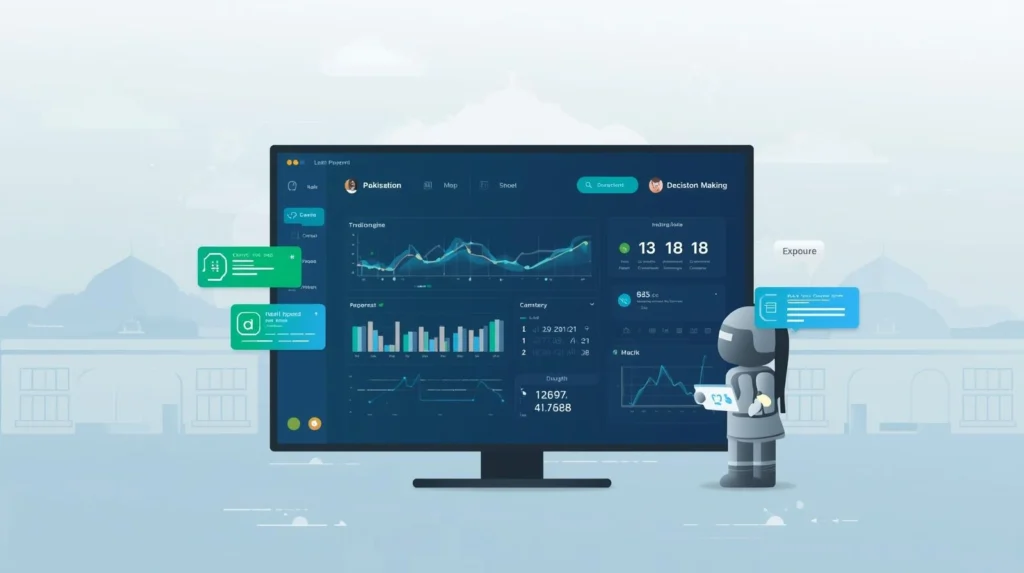
Imagine a school where the administration can instantly access a student’s performance history, predict potential academic challenges, and even forecast the success of future school projects—all at the touch of a button. Sounds like something out of a science fiction movie, right? Well, the future is here. With AI-powered school ERP systems, educational institutions can make data-driven decisions that significantly improve student outcomes and streamline operations.
In Pakistan, where schools and educational institutions are under increasing pressure to modernize their processes, AI in school ERP software provides a much-needed solution. By integrating AI-driven school management systems, schools can automate tasks, predict trends, and provide personalized experiences for both students and staff.
This blog will explore how AI is revolutionizing school ERP software and how it can help schools make better, more informed decisions.
1. What Is AI-Powered School ERP Software?
AI-powered school ERP software integrates artificial intelligence algorithms with traditional school ERP systems to enhance their functionalities. While ERP software helps manage administrative functions like attendance, grades, timetables, and finances, AI adds a layer of intelligence that can predict outcomes, automate repetitive tasks, and offer deeper insights.
AI can analyze vast amounts of data collected through ERP systems, including student records, teacher performance, and financial management, and make actionable predictions. For example, an AI model could analyze a student’s academic performance over the years and predict whether they are at risk of falling behind, enabling early intervention.
2. How Does AI Enhance School Decision-Making?
AI can turn raw data from school ERP systems into valuable insights. The integration of AI helps school leaders and administrators make data-backed decisions, which are critical for the institution’s success.
- Predictive Analytics: AI uses data to forecast future trends, such as student performance, attendance patterns, and even financial projections. For example, AI can predict a student’s likelihood of passing based on their performance history, allowing teachers to intervene before it’s too late.
- Resource Allocation: By analyzing historical data, AI can help school management allocate resources efficiently, ensuring that staff and facilities are utilized optimally.
- Customized Learning: AI-driven systems can track students’ progress and learning patterns, offering insights into how each student learns best. This enables teachers to personalize their teaching strategies, resulting in more effective learning experiences.
3. Can AI Help with Student Performance Tracking?
AI-powered school ERP software excels in student performance tracking. Traditional methods rely on manual data entry, which is time-consuming and prone to errors. AI, on the other hand, automates this process by analyzing vast datasets in real time.
For instance, an AI system can track academic performance, behavior patterns, and extracurricular participation to generate a comprehensive student profile. This profile can then be used to:
- Identify struggling students early on.
- Provide personalized support plans.
- Predict the student’s future academic trajectory.
This feature allows educators to make timely interventions, thus improving student performance across the board.
4. How Does AI Improve Teacher Performance and Engagement?
One of the most important aspects of school management is ensuring that teachers are performing at their best. AI can support this by providing real-time analytics on teacher performance and engagement.
For example, AI can analyze student feedback, teaching methods, and classroom participation to gauge a teacher’s effectiveness. It can then provide suggestions for improvement based on data insights. Teachers can use these insights to refine their teaching techniques, enhancing overall educational quality.
Moreover, AI can automate administrative tasks like grading and report generation, giving teachers more time to focus on teaching and student engagement.
5. What Are the Benefits of AI in Financial Management for Schools?
Managing finances in a school can be challenging, especially when it comes to tracking fees, salaries, and budgets. AI-powered school ERP systems simplify this by automating financial tracking and generating real-time financial reports.
AI can predict cash flow trends and detect anomalies, helping school administrators make better financial decisions. For instance, AI can flag irregular fee payments or highlight budgetary discrepancies, making it easier for schools to stay within their financial limits.
Additionally, AI can optimize the fee structure by analyzing payment patterns and suggesting the best pricing strategy based on historical data.
6. How Can AI Improve Communication Between Parents, Students, and Teachers?
Effective communication between parents, students, and teachers is crucial for a student’s success. AI can automate communication processes, ensuring that everyone stays informed and engaged.
- Chatbots: AI chatbots can answer common questions from parents, such as information about school events, schedules, and fee payments, all without human intervention.
- Automated Alerts: AI can send real-time alerts to parents about their child’s performance, attendance, or behavior, allowing them to act promptly.
- Personalized Updates: By analyzing data, AI can provide personalized progress reports to parents, keeping them informed about their child’s academic development.
By improving communication, AI helps foster a more collaborative environment between parents and teachers, which is essential for the success of the student.
7. How Does AI-Driven School ERP Help with Operational Efficiency?
One of the greatest advantages of AI in school ERP software is the automation of day-to-day administrative tasks. AI eliminates the need for manual data entry and repetitive tasks, reducing human error and saving valuable time.
For instance, AI can automate the scheduling of classes, optimize room assignments, and handle student attendance. This not only improves operational efficiency but also reduces administrative costs. Additionally, AI can help schools analyze their operations and suggest improvements to enhance efficiency, such as optimizing staff schedules or identifying areas for cost reduction.
8. Is AI in School ERP Software Secure?
With AI-driven school ERP systems processing sensitive data, security is a top concern. Fortunately, AI can enhance the security of these systems by:
- Detecting Unusual Activity: AI can analyze user behavior and flag any unusual or suspicious activity, preventing unauthorized access to student or staff data.
- Predictive Maintenance: AI can predict when a system is likely to encounter issues or failures, enabling schools to perform maintenance before problems arise.
- Data Encryption and Protection: AI-powered systems often incorporate advanced encryption techniques, ensuring that sensitive data is protected from cyber threats.
Conclusion: The Future of School ERP in Pakistan
As AI continues to evolve, school ERP software will only become more intelligent and capable. For Pakistani schools looking to improve decision-making, enhance operational efficiency, and provide better learning experiences, AI is the key to unlocking these benefits.
By implementing AI-powered school ERP systems, schools can optimize resource allocation, track student performance with precision, and make data-driven decisions that directly impact student success. Schools in Pakistan, particularly those in urban areas like Karachi and Lahore, are already beginning to adopt these technologies to stay ahead of the curve.
In the coming years, AI in school ERP software will likely become a standard across educational institutions. The schools that adopt this technology early will be well-positioned to provide better educational experiences and manage operations more efficiently.
FAQ: Common Questions About AI in School ERP Software
1. What is AI in School ERP Software?
AI in school ERP software integrates machine learning and data analytics to automate tasks, predict outcomes, and enhance decision-making within educational institutions.
2. How can AI help with student performance tracking?
AI can analyze students’ academic records and predict future performance, enabling educators to intervene early and provide personalized support.
3. Is AI in school ERP software secure?
Yes, AI-driven systems enhance security by detecting unusual activity, encrypting data, and predicting maintenance needs to protect sensitive information.
4. How does AI improve communication in schools?
AI improves communication by automating alerts, providing personalized updates, and using chatbots to answer parents’ questions in real time.
5. Can AI reduce operational costs in schools?
Yes, AI reduces administrative workload by automating tasks like attendance tracking, class scheduling, and fee management, improving efficiency and cutting costs.
6. Is AI-powered ERP software expensive?
While the initial investment in AI-powered school ERP systems can be significant, the long-term benefits in efficiency and decision-making often justify the cost.
7. How does AI impact teacher performance?
AI can provide real-time feedback on teaching effectiveness, helping educators improve their teaching methods and better engage with students.