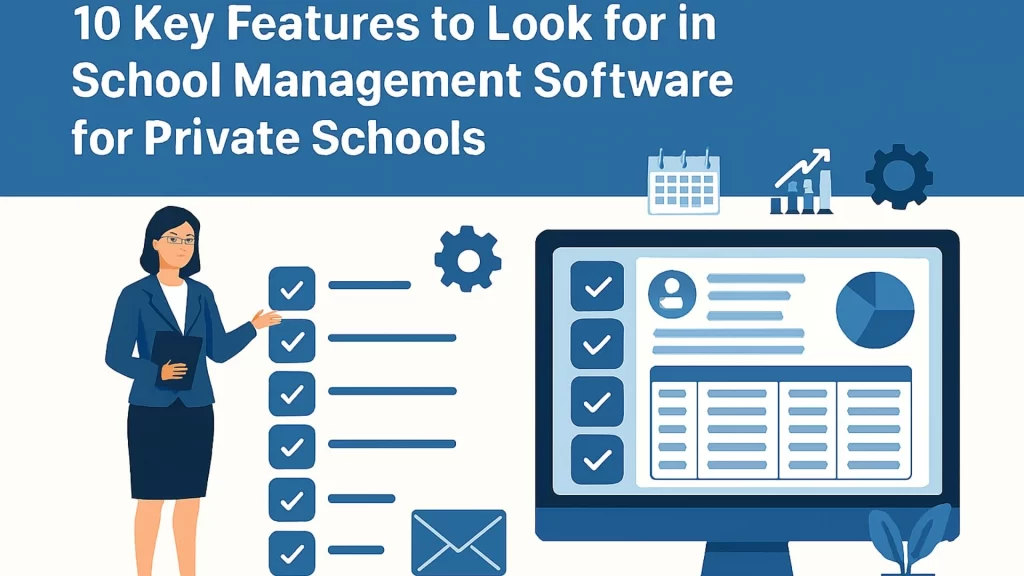
How can private schools streamline their operations, improve efficiency, and enhance the overall educational experience? The answer lies in selecting the right School Software for Private Schools. In today’s digital age, Education Tools are essential for managing everything from student records and grading to communication and finance. However, not all School Features are created equal. If you’re considering implementing School Management Software, it’s important to focus on features that will enhance your school’s operations, simplify administrative tasks, and contribute to student success.
In this blog, we’ll explore the 10 key features that you should look for when evaluating School Software for Private Schools. These features are designed to empower educators, improve parent-school communication, and support school administration with powerful, easy-to-use tools.
Talk to Our Experts Today
Instant support or book a free demo
1. What Makes an Intuitive Dashboard a Key Feature for Private Schools?
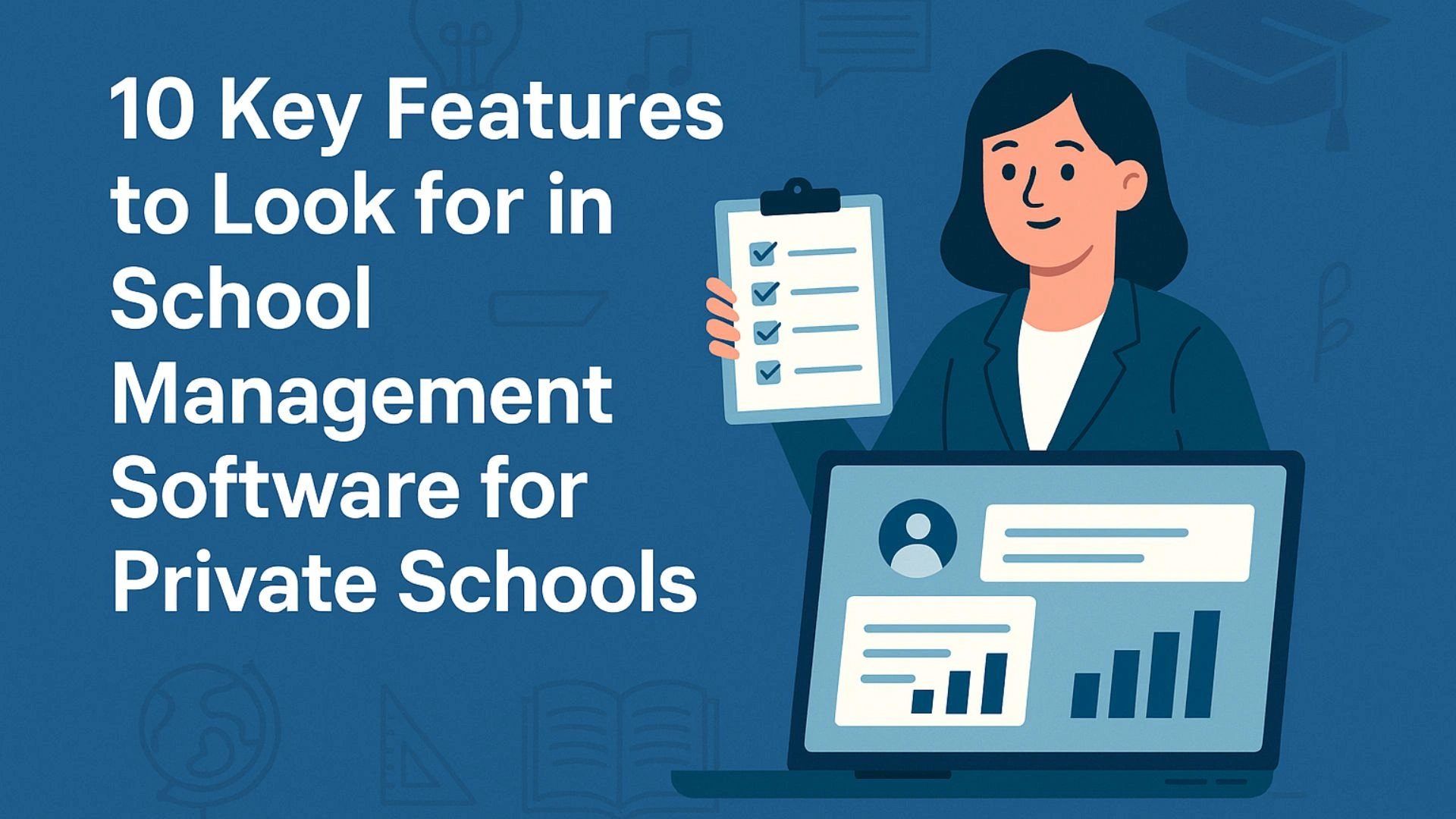
When considering School Software for Private Schools, one of the most important features to prioritize is an intuitive, user-friendly dashboard. An easy-to-navigate dashboard ensures that teachers, administrators, and even parents can quickly access the information they need.
An intuitive dashboard serves as the central hub for all critical school data. From attendance records and student grades to communication updates, everything is just a click away. For school administrators, this means managing the school’s daily operations can be done with efficiency and ease. For teachers, it provides a single view where they can access lesson plans, student performance data, and communication channels in one place.
This School Feature ensures that all users—from teachers and students to parents and staff—can find and process information quickly, saving valuable time in the process.
2. How Does a Robust Student Information System Improve Operations?
The core of any effective School Software for Private Schools is a strong Student Information System (SIS). A comprehensive SIS helps track and manage student data, including grades, attendance, behavioral records, medical history, and more.
By integrating all this essential data into one centralized system, private schools can make informed decisions about their students’ needs. Teachers can monitor academic progress, identify at-risk students, and intervene when necessary. The SIS also allows administrators to generate reports that provide insights into student performance trends over time, which can inform curriculum adjustments and individualized support plans.
For parents, access to their child’s academic records and attendance can help them stay involved in their child’s education, fostering a stronger partnership between school and home.
3. Why Is Automated Attendance Tracking Crucial for Private Schools?
Attendance is an area where many schools face challenges. Manual attendance tracking can be time-consuming and prone to errors. School Software for Private Schools should include automated attendance tracking, which not only saves time but also reduces errors.
Automated attendance systems allow teachers to quickly mark attendance with a few clicks. Some systems even track tardiness, absences, and early departures, making it easier for administrators to monitor attendance patterns across the school. Automated attendance also supports real-time communication, notifying parents immediately if their child misses class.
This system helps private schools maintain accurate records, while also ensuring students are held accountable for their attendance.
4. How Does Gradebook Integration Support Teacher Efficiency?
One of the most essential features for any school management software is an integrated Gradebook. For private schools, a Gradebook is not just about recording grades—it’s about managing the entire assessment and feedback process efficiently.
A gradebook within the School Software allows teachers to easily input grades, track student progress, and communicate with students and parents about performance. In many systems, teachers can create rubrics, track assignments, and provide feedback on specific tasks, all in one platform. This eliminates the need for paper-based grading, which can be time-consuming and prone to human error.
Additionally, gradebook features that allow for customizable grading scales and weighted assessments help schools tailor their grading methods to their curriculum, ensuring that they reflect the school’s educational goals.
5. Why Is Seamless Communication Between Teachers, Students, and Parents Important?
Communication is often cited as one of the biggest pain points in school administration. Whether it’s informing parents about their child’s progress or collaborating with colleagues on lesson plans, communication is essential for a smooth educational experience.
Modern School Software for Private Schools should come equipped with robust communication tools that allow for seamless interaction between teachers, students, and parents. For example, a messaging system that allows teachers to send announcements, assignments, or feedback directly to students or parents reduces reliance on emails or phone calls.
When parents can easily track their child’s academic progress, respond to messages, and view reports, it strengthens the relationship between home and school. This communication can also be automated, ensuring that parents receive updates on attendance, grades, and school events without having to ask.
6. How Do Financial Management Features Benefit Private Schools?
Managing finances can be one of the most challenging tasks for any private school. Handling tuition fees, donations, payroll, and other financial operations manually is prone to errors and can lead to inefficiencies.
A good School Software for Private Schools should include a financial management module to track all monetary transactions, generate invoices, and process payments. These systems automate billing, track outstanding payments, and generate financial reports, giving administrators a clear picture of the school’s financial health.
This feature is especially helpful for private schools that rely heavily on tuition fees, donations, and other funding sources. Financial management tools make it easier to budget for upcoming expenses, monitor cash flow, and plan for future growth.
7. How Does Scheduling and Timetable Management Simplify School Operations?
Efficient scheduling is crucial for any school to function smoothly, and private schools are no exception. With multiple classes, extracurricular activities, and staff schedules to manage, a scheduling feature in your School Software for Private Schools can save administrators hours of planning.
Talk to Our Experts Today
Instant support or book a free demo
The system should allow for the easy creation of timetables, tracking teacher availability, and ensuring there are no scheduling conflicts. It also allows for automatic updates, ensuring everyone in the school community knows about changes to class timings or events.
For teachers, scheduling software ensures they have clear visibility on their workload, enabling them to plan their lessons and activities effectively. For students, it ensures they follow a well-structured timetable that meets their academic needs.
8. Why Is Data Security and Privacy Critical for School
With increasing concerns about data privacy and security, School Software for Private Schools must prioritize protecting sensitive information. Schools handle a variety of personal data, from student grades to health records, making data security paramount.
A robust School Management System should include encrypted data storage, secure logins, and access controls to prevent unauthorized access to private information. Additionally, systems should comply with regulatory standards, such as FERPA (Family Educational Rights and Privacy Act) or GDPR (General Data Protection Regulation), to ensure legal compliance.
A secure system helps build trust with parents, students, and staff, knowing that their information is safe and protected from breaches.
9. How Do Customization and Scalability Benefit Growing Private Schools?
As private schools grow, their needs evolve. One of the greatest advantages of School Software for Private Schools is the ability to scale and customize the software to fit the specific needs of the institution.
Whether it’s adding more users, integrating new features, or expanding the system to accommodate a larger student body, scalability ensures the software can grow with the school. Customization features also allow the school to tailor the software to its curriculum, policies, and specific administrative needs, ensuring a fit for the unique culture of the institution.
10. Why Are Reporting and Analytics Essential for School Improvement?
Data-driven decision-making is key to improving any school’s performance. School Software for Private Schools should come equipped with powerful reporting and analytics tools that allow administrators to generate customized reports on student performance, attendance, and financial data.
These analytics provide valuable insights that can help improve teaching methods, identify areas for curriculum improvement, and help parents stay informed about their child’s progress. By tracking trends over time, schools can make informed decisions and continuously improve educational quality.
Conclusion
Choosing the right School Software for Private Schools is a crucial decision for any institution looking to streamline operations, improve efficiency, and create a more connected and data-driven school environment. With the right features, such as a robust student information system, automated attendance tracking, seamless communication tools, and financial management capabilities, schools can empower their staff and improve the overall educational experience for students and parents alike. Investing in quality Education Tools will ensure that your private school stays ahead in today’s increasingly digital world.
FAQs About Features in School Software for Private Schools
Q1: What are the most important features to look for in school management software for private schools?
The most important features include an intuitive dashboard, student information system, automated attendance tracking, gradebook integration, communication tools, financial management, scheduling, data security, and reporting and analytics.
Q2: How can school software help improve communication between teachers and parents?
School software allows teachers to send announcements, grades, and feedback directly to parents through integrated communication tools, reducing the need for phone calls or emails and improving transparency.
Q3: Can school software help with financial management?
Yes, School Software for Private Schools can automate billing, track payments, generate invoices, and manage financial reports, making financial operations more efficient.
Q4: How does data security play a role in school management software?
Data security ensures that sensitive student and staff information is protected from unauthorized access. Strong encryption, secure logins, and compliance with privacy laws like FERPA and GDPR are critical components.
Q5: Can school software be customized to fit the needs of different private schools?
Yes, good school management software is highly customizable and scalable, allowing schools to tailor it to their unique administrative, academic, and cultural needs.